Can a Battery Charger Cause a Fire?
Yes, a battery charger can cause a fire, but it's the exception rather than the rule with a modern, certified charger used correctly. Most fires trace back to a damaged cord, a wrong voltage setting, poor ventilation or a battery that's already failing.
On this page (10 sections)
- Can a battery charger actually cause a fire?
- What usually causes a battery charger fire?
- Are cheap or uncertified chargers riskier?
- Can overcharging start a fire?
- Is it safe to leave a charger connected for months?
- Where should you charge a battery to reduce fire risk?
- What should you check before every charge?
- Do lithium batteries change the risk?
- Is it safe to charge a car or truck battery at home?
- Bottom line: can a battery charger cause a fire?
Yes, a battery charger can cause a fire, but it's the exception rather than the rule with a modern, certified charger used correctly. Most fires trace back to a damaged cord, a wrong voltage setting, poor ventilation or a battery that's already failing.
The question "can a battery charger cause a fire" comes up a lot, and the honest answer is that the risk is real but small and mostly avoidable.
The charger itself is rarely the villain in a house fire. The setup around it is.
A frayed lead, a battery left on a basic trickle charge for weeks, or a unit shoved against a rag in a hot garage does more damage than a well-made charger ever will. This guide walks through the real causes and the habits that keep charging safe.
Can a battery charger actually cause a fire?
Yes, a charger can start a fire, but only when something in the chain fails. The chain is the wall outlet, the charger, the cable and the battery.
Any weak link can overheat.
Three things turn a normal charge into a hazard. The first is a faulty charger, usually a cheap unit with no safety certification.
The second is the wrong charger for the battery, like a 24 volt unit on a 12 volt battery or a lead acid charger on a lithium pack. The third is a battery that's already damaged and heats up under charge.
A smart charger lowers this risk by design. It reads the battery, adjusts the current, and drops to a float or pulse stage when the battery is full.
A basic charger keeps pushing, so the battery keeps warming. That's why the choice of charger matters more than most people think.
What usually causes a battery charger fire?
The typical causes are cable damage, wrong settings, blocked airflow and a failing battery. Each one is easy to check before you plug in.
- A cracked or undersized extension cord that can't carry the current.
- Reversed clamps, which some chargers protect against and some don't.
- Charging in a sealed space where hydrogen gas from a lead acid battery can build up.
- A charger sitting on carpet or against a wall, with no air around its vents.
- A battery with a swollen case, a cracked shell or a loose terminal.
Loose clamps deserve their own mention. A poor connection at the battery post creates resistance, and resistance makes heat.
If a clamp feels warm during charging, stop and clean the post.
Are cheap or uncertified chargers riskier?
Yes, a charger without a recognized safety mark is a bigger gamble. Certification means the unit passed tests for insulation, heat and short circuits.
Look for ETL, UL or CE on the label. These marks tell you the charger met a published safety standard.
A no-name unit may skip those tests to hit a low price.
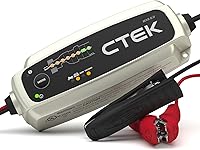
The CTEK MXS 5.0 carries several protections that matter here. CTEK says its design is splash, dust, spark and shock proof, with a short-circuit-proof layout that prevents reverse polarity.
It also meets IP65, which covers dust and water jets. Those features don't make it fireproof, but they remove several common failure paths.
That's the practical reason to spend a little more on a known brand. You're not buying a guarantee, you're buying fewer ways for the unit to fail.
Can overcharging start a fire?
Overcharging can start a fire when a basic charger keeps feeding a full battery. The battery warms, the electrolyte can vent, and in a sealed spot the gas has nowhere to go.
A smart charger avoids this by switching stages. The CTEK MXS 5.0 uses what CTEK calls patented float and pulse charging, which allows set-and-forget charging for months without harming the battery.
It moves to a maintenance stage once the battery is full rather than pushing current.
The Battery Tender Plus 1.25 Amp works on the same idea. Battery Tender says its 4-step program charges and then maintains, and that its float mode prevents overcharging.
A solid two-color LED shows the charge state and resumes full output only if the voltage drops under load.
If you use a plain trickle charger with no float stage, unplug it once the battery reads full. Leaving it connected for days is where the heat builds.
Our guide to trickle charger vs battery maintainer explains which type suits long-term storage.
Is it safe to leave a charger connected for months?
It's safe only with a maintainer built for continuous connection. A charger that holds a steady float voltage can stay on a stored battery for weeks without damage.
A basic charger cannot.
This matters for boats, RVs, classic cars and seasonal motorcycles. These sit for months, and owners often leave a charger on to keep the battery alive.
The wrong unit will boil off electrolyte or cook the plates.
CTEK says the MXS 5.0 can stay connected for months at a time without harming the battery. That's the kind of charger you want for a stored vehicle.
For smaller 12V batteries in motorcycles, jet skis and lawnmowers, the CTEK US 0.8 uses a 6-step program with a desulphation stage. CTEK says it's non-sparking, reverse polarity protected and short circuit proof.
Pair a maintainer with a permanent eyelet connector and you avoid clipping and unclipping clamps each time. Fewer clamp sessions mean less chance of a loose or reversed connection.
See our picks for a battery charger for motorcycle use if that's your main job.
Where should you charge a battery to reduce fire risk?
Charge in a ventilated space, away from anything that can burn. A garage with airflow, a concrete floor and no ignition source is the right setting.
A sealed closet is not.
Keep the charger off carpet, paper and rags. Set it on a hard surface where air can reach its vents.
Don't stack boxes around it or tuck it behind a shelf.
Lead acid batteries can give off hydrogen gas while charging. Keep flames, sparks and smoking tools away.
If your garage has a water heater or furnace with a pilot light, keep the charging area clear of it.
Don't charge a battery that's frozen, swollen or leaking. Move it outdoors and away from the building until you can dispose of it properly.
Heat plus a damaged case is the combination to avoid.
What should you check before every charge?
Check the cord, the clamps, the settings and the battery case before you plug in. A 30-second look catches most of the failure paths that lead to heat.
- Run your hand along the cord for cracks or exposed wire.
- Look at the clamps for corrosion or a loose fit.
- Match the charger's voltage and chemistry to the battery.
- Set the right mode: lead acid, AGM or lithium, whichever your charger offers.
- Look at the battery for swelling, leaks or a cracked shell.
- Make sure the charger sits in open air, not against a wall.
If anything looks wrong, stop. A damaged cord or a bulging battery is a replace-it item, not a repair-it item.
A fire is far more expensive than a new charger or battery.
Do lithium batteries change the risk?
Yes, lithium packs raise the stakes. A lithium battery fire burns hot and is hard to smother.
The charger must match the pack's exact voltage and chemistry.
Never use a lead acid charger on a lithium battery. The charge profile is different, and overcharging a lithium cell can cause a runaway reaction.
Use a charger with a lithium mode and follow its instructions.
Stop charging a lithium pack if it swells, hisses or gets hot to the touch. Move it away from anything flammable and let it cool somewhere safe outdoors.
Don't cover it or put it in a bag.
For lead acid and AGM batteries, the risk is lower but not zero. The same checks apply: right charger, right setting, good airflow.
Our guide to the 10 amp battery charger options covers faster charging for larger batteries when you need it.
Is it safe to charge a car or truck battery at home?
Yes, home charging is safe when the charger matches the battery and the space is ventilated. Most household fires linked to chargers come from a mismatch or a damaged unit, not from charging itself.
Large diesel battery banks take more current, so a small maintainer will charge slowly. A charger built for that job is the better fit.
Our picks for a battery charger for diesel truck cover the higher-output options. Whatever you choose, keep the charger off the floor where it can sit in a puddle, and unplug it by the plug, not the cord.
Bottom line: can a battery charger cause a fire?
It can, but the risk comes mostly from the setup, not the charger. A certified smart charger, the right settings and a ventilated space remove almost every common cause.
Pick the CTEK MXS 5.0 for a car, bike or AGM battery you want to maintain for months. Choose the Battery Tender Plus 1.25 Amp for storage on a classic or weekend vehicle.
Go with the CTEK US 0.8 for a small 12V battery in a motorcycle, ATV or lawnmower.
Replace any charger with a frayed cord or a cracked case. Unplug basic chargers when the battery is full.
And if a battery looks swollen or smells odd, stop and deal with the battery first. That habit alone prevents most of the fires people worry about when they ask whether a battery charger can cause a fire.
Frequently asked questions
Can a battery charger cause a fire if left plugged in overnight?
It can if the charger isn't designed for continuous use or the battery is already failing. A smart maintainer that shifts to float mode once the battery is full is the safer choice.
Check the charger's instructions for how long it can stay connected.
Is it safe to charge a car battery in a garage?
Yes, if the space has airflow and no ignition source nearby. Lead acid batteries can give off hydrogen gas while charging, so keep sparks, flames and smoking tools away.
Don't charge in a sealed closet or a space with a water heater pilot light.
Should I unplug my charger when the battery is full?
Unplug a basic charger once the battery is full, because it can keep pushing current. A smart charger with a float or pulse stage can stay connected safely for maintenance.
Follow the maker's instructions for your specific model.
How do I know a charger is safe to use?
Look for safety certifications such as ETL, UL or CE, plus protections like reverse polarity and short circuit protection. A splash rating like IP65 helps in damp spaces.
A damaged case or frayed cord means replace it, not repair it.
Can a lithium battery charger catch fire?
Yes, and lithium fires are harder to put out. A lithium pack needs a charger built for its exact voltage and chemistry.
A lead acid charger used on a lithium battery can overcharge it.
Stop charging if the pack swells or gets hot.