What Battery Charger Is Best for an AGM Battery?
The best charger for an AGM battery is a smart 6V/12V charger with a dedicated AGM setting, temperature sensing and a float stage, such as the NOCO GENIUS5. AGM batteries charge at a lower voltage than flooded lead-acid, so a charger built for flooded cells alone can push too much current into them.
On this page (9 sections)
- What makes a charger AGM-safe?
- Which charger should most AGM owners buy?
- Which charger is best for a vehicle that sits for months?
- Which charger suits a 6V AGM or a smaller battery?
- How do you connect a charger to an AGM battery safely?
- What voltage should an AGM battery charge at?
- Charger or maintainer: which one do you need?
- Common AGM charging mistakes to avoid
- So what battery charger for an AGM battery is the right buy?
What battery charger for an AGM battery should you buy? The best pick is a smart 6V/12V charger with a dedicated AGM setting, temperature sensing and a float stage, like the NOCO GENIUS5.
AGM cells are sealed and can't be topped up with water, so they punish a charger that keeps pushing current after they're full.
The short version: match the charger to the battery's chemistry, not just its size. An AGM battery wants a slightly lower charge voltage than a flooded cell and a gentler float stage.
A smart charger handles both without you watching it.
What makes a charger AGM-safe?
A charger is AGM-safe when it has an AGM or sealed battery mode and holds a controlled float voltage after the bulk charge. AGM batteries recombine their gas internally, so they can't vent excess pressure or lose water like a flooded battery.
That means overcharging is the main risk. A flooded battery tolerates a long absorption stage at a high voltage; an AGM cell at the same voltage dries out and loses capacity over time.
Look for a charger that lists AGM, sealed, SLA or VRLA among its supported types.
Temperature matters too. A cold battery accepts more voltage and a hot one accepts less.
A charger with an internal thermal sensor adjusts the charge profile as the ambient temperature changes, which is what keeps an AGM battery from being cooked in summer or undercharged in winter.
Which charger should most AGM owners buy?
The NOCO GENIUS5 is the best pick for most AGM owners, because it covers 6V and 12V AGM, gel and flooded batteries in one unit and adjusts the charge to the temperature around it. It's a 5 amp charger, so a single 12V AGM fills overnight.
The GENIUS5 also handles a dead battery. It can start charging from as low as 1 volt, and Force Mode lets you manually charge a battery that reads zero volts.
For a boat or camper battery that sat all winter, that's the feature that saves a replacement.
NOCO builds in pulse charging that the company says reverses sulfation and acid stratification. The thermal sensor is the part that matters most for AGM: it prevents overcharging in hot weather and undercharging in cold.
It ships with clamps and eyelet terminals, a mounting bracket and a 3-year warranty.
Which charger is best for a vehicle that sits for months?
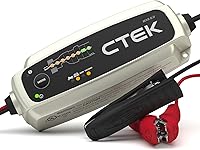
The CTEK MXS 5.0 is the best pick for a car, boat or RV that sits for long stretches, because its float and pulse stages are built to stay connected for months without harming the battery. It's a fully automatic 8-step charger for 12V lead-acid and AGM batteries.
The 4.3 amp output suits a single 12V AGM in a car or motorcycle. CTEK's set-and-forget design means you can leave the charger attached without disconnecting the battery, and the case is rated IP65 for splash and dust, so a garage or marine environment won't stop it.
Its reconditioning function can improve the lifespan of a healthy battery and bring some underperforming batteries back. The short-circuit-proof design also protects against reverse polarity, so a mistaken clamp connection won't damage the charger.
CTEK says the MXS 5.0 works in cold weather, which matters if your AGM lives in an unheated garage. The trade-off is the lower amperage: 4.3 amps means a deeply drained battery takes longer to fill than it would on a 5 or 10 amp unit.
Which charger suits a 6V AGM or a smaller battery?
The Battery Tender 3 Amp is the best pick for 6V AGM batteries, motorcycles and smaller 12V batteries, because it switches between 6V and 12V with a button and keeps the battery topped up in float mode. It's a 3 amp charger, so it suits batteries that don't need a fast bulk charge.
The charger detects reverse polarity automatically and is spark-proof during the connection, so it's a safe first charger for someone new to battery care. A two-color LED shows the charge status, and the charger resumes full output if the voltage drops under load.
Battery Tender backs it with a 5-year manufacturer's warranty. It includes a ring terminal and alligator clip combo cable and 11 feet of combined reach between the AC and DC cords, which helps when the outlet is far from the battery.
The 3 amp output is the limit here. It's fine for a motorcycle or a lawn mower AGM, but it's slow on a big diesel truck bank.
For that, step up to a 10 amp battery charger.
How do you connect a charger to an AGM battery safely?
Clamp positive first, then negative, and make the final negative connection away from the battery when you can. AGM batteries can still release gas if they're badly overcharged, so keep sparks away from the terminals.
Start with the charger unplugged. Connect the red clamp to the positive terminal and the black clamp to negative, then plug the charger into the wall.
If you use permanent eyelet terminals, bolt them to the posts and leave the connector hanging where it won't short against metal.
Our walkthrough of how to connect a battery charger to a battery covers the full sequence, including what to do when the battery is still in the vehicle. Ventilation matters, so charge in a space with airflow rather than a sealed cabinet.
When the charge finishes, unplug the charger before you remove the clamps. Pull the negative clamp first, then the positive.
What voltage should an AGM battery charge at?
Most 12V AGM batteries want about 14.4 to 14.8 volts in the absorption stage and 13.2 to 13.8 volts in float, though the exact numbers come from the battery maker. Check your battery's label before you assume a setting.
A smart charger picks these stages for you once you select the AGM profile. A basic charger with one fixed voltage can't do that, which is why a cheap unit is a poor match for a sealed battery.
The NOCO GENIUS5, CTEK MXS 5.0 and Battery Tender 3 Amp all manage the stages automatically.
Temperature shifts those numbers. A battery at freezing wants a higher charge voltage, and one in a hot engine bay wants a lower one.
That's the job of the thermal sensor in the GENIUS5 and the cold-weather design CTEK builds into the MXS 5.0.
If you're charging a 6V AGM, the voltage halves. The Battery Tender's 6V mode handles that without a separate charger.
Charger or maintainer: which one do you need?
Buy a charger if the battery is drained and needs a full refill; buy a maintainer if it's already full and you want to keep it there. Most smart chargers do both jobs, so the line between them is thinner than the names suggest.
A charger runs a bulk stage at higher current, then absorption and float. A maintainer mostly sits in float and tops up as the battery self-discharges.
The GENIUS5 and MXS 5.0 are both sold as charger-maintainer combos, so they cover a dead battery and a stored one.
For a seasonal vehicle, a maintainer is the better fit. For a battery you just jump-started or found flat in the garage, you need the bulk charge first.
Our guide to the trickle charger vs battery maintainer difference explains when each one earns its place.
If you own a diesel truck with two batteries, the amperage question changes. A dedicated battery charger for diesel truck setups covers the larger bank without a multi-day wait.
Common AGM charging mistakes to avoid
The biggest mistake is using a flooded-battery charger on an AGM cell and leaving it connected. The high float voltage keeps trickling current in, and the sealed battery can't vent the pressure or replace the water it loses.
The second mistake is charging a frozen battery. Let it warm to room temperature first.
Charging a frozen AGM can damage the plates and, in a worst case, crack the case.
Don't skip the AGM mode because the charger "works on all batteries". A charger with a generic setting may be fine, but the dedicated AGM profile is the safer choice for a sealed cell.
And don't judge a charge by how warm the case feels; use the charger's status light or a voltmeter.
So what battery charger for an AGM battery is the right buy?
Pick the NOCO GENIUS5 if you want one charger for 6V and 12V AGM batteries, including dead ones, because its AGM mode and thermal sensor handle the sealed chemistry correctly. Pick the CTEK MXS 5.0 for a vehicle that sits for months and needs a set-and-forget maintainer.
Pick the Battery Tender 3 Amp for a 6V AGM or a smaller 12V battery on a budget.
Our score weighs specs, features and buyer feedback against what you're shopping for. All three picks manage the AGM charge stages; the difference is amperage and how long you plan to leave the charger attached.
If your AGM is in a big truck or a dual-battery bank, size up before you buy. And if you're still deciding between a full charger and a top-up unit, read the trickle charger vs battery maintainer comparison first.
Either way, match the charger to the AGM setting and let the smart stages do the rest.
Frequently asked questions
Can I charge an AGM battery with a regular car charger?
Only if that charger has an AGM mode or a voltage setting low enough for the battery. A basic fixed-voltage charger without temperature compensation can overcharge an AGM cell, so check the settings before you connect it.
Does an AGM battery need a different charger than a flooded battery?
Yes. AGM batteries want a slightly lower charge voltage and a lower float voltage than flooded lead-acid, and they tolerate less overcharging.
A charger with an AGM profile handles both stages correctly.
How long does it take to charge a flat AGM battery?
Plan on 6 to 12 hours for a partly drained AGM battery on a 4 to 5 amp smart charger. A deeply discharged battery takes longer because the charger moves slowly at first, and the NOCO GENIUS5 lists about 8 hours of charge time.
Is a trickle charger safe to leave on an AGM battery?
Yes, if it is a smart maintainer with a float stage that stops charging once the battery is full. Leave the battery connected for weeks at a time only with a charger the maker says is safe to keep attached.
What size charger do I need for a large AGM bank?
For a single 12V AGM under 120 amp-hours, a 3 to 5 amp smart charger is plenty. For a large bank or a diesel truck with two batteries, step up to a 10 amp charger so the bank fills in a reasonable time.