How to Use a Battery Tender Junior
To use a Battery Tender Junior, connect the fused ring-terminal harness to the battery posts, plug the charger into a wall outlet, and let the two-color LED show the charge. It runs a four-step program and then switches to float mode to hold the battery at full charge.
On this page (9 sections)
- What comes in the Battery Tender Junior box?
- How do you connect the Battery Tender Junior to a battery?
- Can you leave a Battery Tender Junior connected all winter?
- What do the Battery Tender Junior LED colors mean?
- How long does the Battery Tender Junior take to charge?
- How do you know when to move up to a bigger charger?
- What mistakes should you avoid when using a Battery Tender Junior?
- How should you store the charger between uses?
- Which charger should you pick for your battery?
To use a Battery Tender Junior, connect the fused ring-terminal harness to the battery posts, plug the charger into a wall outlet, and let the two-color LED show the charge. It runs a four-step program and then switches to float mode to hold the battery at full charge.
The whole process takes minutes to set up and then runs on its own. Below is how to use Battery Tender Junior safely, from choosing the connection to reading the light and storing the bike on the charger.
What comes in the Battery Tender Junior box?
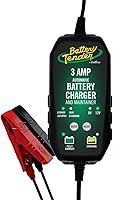
You get the 750mA charger, a fused ring-terminal harness, alligator clip cables, and a 12-foot output cord. The ring-terminal lead bolts onto the battery; the alligator clips are the quick option for a battery you can reach.
The charger itself measures 3.3 x 1.3 x 2.4 inches and weighs about 1 lb. Battery Tender backs it with a 5-year warranty and lifetime customer support.
It works with all 12V lead-acid batteries, including flooded, AGM, and gel cell types. The unit meets CSA, ETL, and FCC specifications, so it is certified for use in the US and Canada.
The four-step program is initialization, bulk charge, absorption mode, and float mode. That last step is what separates it from a plain trickle charger, which keeps pushing current and can cook a battery in storage.
Battery Tender describes the Junior as a smart charger for exactly this reason.
The kit ships as a single unit with one output port. The color is black and green, and the model number is 021-0123.
If you want the full spec sheet before you buy, the model name to search is Battery Tender 021-0123.
How do you connect the Battery Tender Junior to a battery?
Bolt the ring-terminal harness to the battery posts first, then plug the charger's output lead into it and the charger into the wall. The ring terminals are the better long-term choice because they stay on the bike.
Using the ring-terminal harness
Disconnect the battery cables from the bike first, negative terminal first. Slide the red ring terminal onto the positive post and the black one onto the negative post, then tighten both.
Route the quick-connect plug to a spot you can reach without lifting the seat or side panel. On a motorcycle, tucking it near the frame or under the seat edge keeps it out of the weather.
Battery Tender includes the fused lead so a short or surge trips the fuse instead of the battery. The 12-foot output cord then gives you plenty of slack from the wall outlet to the bike.
Using the alligator clips
Clip red to positive and black to negative when the battery is out of the vehicle or easy to reach. The alligator clips are handy for a bench charge or for checking a battery you just pulled.
Keep the clips from touching each other or any metal on the bike. The Junior's spark-proof circuitry helps here, and its reversed hook-up detection checks that you connected the leads the right way.
If the connection is reversed, the charger lets you know rather than pushing current into the wrong post.
Can you leave a Battery Tender Junior connected all winter?
Yes. The Junior switches to float mode at full charge, then offsets the battery's normal self-discharge to keep it at 100% without overcharging.
That makes it a storage charger rather than a one-time top-up. Battery Tender says the adaptive charging resumes full output if voltage drops too far under load, so the battery recovers on its own.
You do not need to unplug and re-plug it during the off-season.
Mount the charger off the floor, away from fuel, and in a spot with airflow. Don't cover it while it runs.
The 12-foot output cord gives you room to hang it on a wall or shelf near the bike.
If you keep several bikes or a car and a motorcycle, one Junior per battery is the simple setup. For a higher-output option for bigger batteries, the Battery Tender 3 Amp Review covers the larger model.
What do the Battery Tender Junior LED colors mean?
The two-color LED tells you the charge state. When the light turns solid green, the battery is full and the charger is in float mode.
While the light is in the charging phase, the Junior is working through bulk and absorption. Leave it connected; the charger decides when to move on.
There is no button to press and no setting to change, so you cannot accidentally put it in the wrong mode.
The single LED is the whole interface. If the light never reaches green after a long session, the battery may be too far gone to recover.
A battery below 2V or one left flat for months often won't come back, and the low-voltage start can only do so much. In that case the LED keeps signaling a charge that never finishes.
How long does the Battery Tender Junior take to charge?
Battery Tender puts a 14–20Ah motorcycle battery at about 14 to 22 hours, and a small 3–5Ah battery at overnight. The 750mA output is sized for powersport batteries, not car batteries.
Plan the first charge as a full day or a night. After that, the Junior just maintains, so short top-ups between rides take far less time.
The charger's 0.75 A rating is why the small batteries fill quickly while a larger one needs a long session.
It's ideal for the 3–30Ah range Battery Tender lists: motorcycles, ATVs, UTVs, scooters, PWCs, and snowmobiles. It also works with all Harley-Davidson 12V models, from Sportster to Softail and Dyna to Touring, CVO, and Pan America.
The included harness makes plugging in easy, so the charger is ready whenever the bike is parked.
How do you know when to move up to a bigger charger?
Pick a bigger charger when your battery is above 30Ah or you want a faster charge on a big battery. The Junior's 750mA is built for small and mid-size 12V batteries.
For a car, truck, or a large deep-cycle battery, a 3-amp or higher charger makes more sense. Our comparison of the Battery Tender Junior vs Battery Tender Plus lays out the difference in output and price tier.
If you're weighing another brand, the Schumacher vs Battery Tender piece covers which suits which job.
If your plans change and you end up with a different smart charger, the steps are similar; see how to use NOCO Genius5 Battery Charger for that model's connection and modes. The key is to match the charger's amperage to the battery's capacity, and the Junior is honest about its 0.75 A ceiling.
What mistakes should you avoid when using a Battery Tender Junior?
Don't connect the clips backward, don't cover the charger, and don't unplug it the moment the light turns green. The reversed hook-up detection flags a wrong connection, but it's easier to get the polarity right from the start.
Other mistakes to skip:
- Leaving the charger on a wet floor or in the rain; it is a dry, ventilated spot only.
- Using it on a 6V battery or a battery over 30Ah; the Junior is a 12V unit.
- Expecting it to revive a battery that sat dead for months. It helps most deeply discharged batteries, but some are past saving.
- Forgetting to check the fuse in the ring-terminal lead if the charger seems dead.
A trickle charger left on too long is a common cause of a swollen battery. The Junior avoids that by switching to float, but only if you leave it plugged in long enough to reach that stage.
How should you store the charger between uses?
Coil the cords loosely, keep the clips from touching metal, and store it dry. The Junior is small enough to live on a shelf in the garage.
Wipe the clips after use if they picked up dirt or corrosion. Check the ring-terminal lead now and then, and replace the fuse if it blows.
The 5-year warranty covers the charger, and Battery Tender's lifetime support can help if the LED behaves oddly.
When the riding season ends, connect the Junior and leave it on. That's the whole job: plug in, watch for green, and let float mode do the rest.
The next spring the battery should be ready to go rather than flat from months of sitting.
Which charger should you pick for your battery?
The Battery Tender Junior is the right pick for a 12V powersport battery you want to maintain, not fast-charge. Bolt on the ring-terminal harness once, plug in when the bike sits, and let the four-step program take over.
If you only need storage maintenance for a motorcycle, ATV, or scooter, the Junior's 750mA output covers the 3–30Ah range and the float mode keeps the battery healthy. It also handles flooded, AGM, and gel cell chemistry without extra settings.
For anything above 30Ah or when speed matters, a larger charger fits better. Either way, the process for how to use Battery Tender Junior stays the same: connect, plug in, read the light, and leave it alone.
Frequently asked questions
What do the Battery Tender Junior LED colors mean?
The two-color LED shows the state of the charge. A solid green light means the battery is fully charged and the charger has moved into float mode; the red phase means it is still charging or recovering a low battery.
Will a Battery Tender Junior charge a completely dead battery?
It recovers most deeply discharged batteries with a low-voltage start. Batteries under 2V or ones left flat for a long time may not come back, so connect it as soon as you notice the battery is weak.
How long does a Battery Tender Junior take to charge a motorcycle battery?
Battery Tender says a 14–20Ah motorcycle battery takes roughly 14 to 22 hours at 750mA. Small 3–5Ah batteries charge overnight, so plan on a full day or a night for most powersport batteries.