How Much Does a Battery Charger Cost?
Most household battery chargers land in the budget to mid-range tiers, and the price you pay tracks three things: charge rate, smart features and brand support. A basic trickle unit costs the least, while a multi-amp smart charger with reconditioning and safety protection costs more.
On this page (7 sections)
- What drives the price of a battery charger?
- How much does a battery charger cost by type?
- Which features are worth paying for?
- How much does a 10 amp battery charger cost?
- Why does the same charger cost more for some buyers?
- Is a cheap battery charger a false economy?
- How much should you budget for a battery charger?
How much does a battery charger cost? Most household battery chargers land in the budget to mid-range tiers, and the number tracks three things: charge rate, smart features and brand support.
A basic trickle unit costs the least, while a multi-amp smart charger with reconditioning and safety protection costs more. That means you can spend a little or a lot on the same job.
The right question isn't the lowest price. It's which charger does what your battery needs without wasting money on features you won't use.
What drives the price of a battery charger?
Amperage, charge intelligence, safety features and brand all move the price. A 1 amp maintainer and a 10 amp smart charger are different tools, so they sit in different tiers.
Amperage is the biggest lever. A low-amp unit trickles energy in over hours, while a 10 amp charger moves much more current and needs a larger power supply inside.
The charge steps matter too. A basic unit just feeds current, while a smart charger runs a multi-stage program and switches to float maintenance.
Add reconditioning, temperature compensation and reverse-polarity protection and the price climbs again. Brand and warranty also count, since a longer warranty is part of what you pay for.
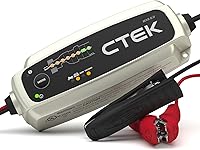
Size and build play a part as well. A compact charger like the CTEK MXS 5.0 measures 11.02 inches wide and weighs 1.3 pounds, which suits a garage shelf.
A 10 amp workshop unit like the Clore PL2310 is heavier at 3.9 pounds and comes in a larger housing.
That extra material is part of why a higher-amp unit costs more. The CTEK MXS 5.0 also lists a 50 hour charge time, a reminder that slow, careful charging is a design choice, not a shortcut.
How much does a battery charger cost by type?
Trickle and maintainer units sit at the low end, multi-amp smart chargers in the middle, and large shop chargers higher. The tier follows the job, not the sticker.
A trickle or float maintainer is the cheapest type. It's built for keeping a healthy battery topped up, not for fast recovery.
If you're unsure which one you need, our guide to the trickle charger vs battery maintainer difference explains where each one fits.
A 10 amp smart charger costs more because it can charge and maintain. It handles faster recovery on larger batteries and adds features like a stable power supply mode.
Jump starters and wheeled shop chargers cost more again, but they're a different category from a plug-in charger.
Where do 6V and 12V chargers sit in the tiers?
Multi-voltage chargers usually cost more than a 12V-only unit because they carry extra circuitry. The Clore PL2310 is a 6V and 12V charger with 2, 6 and 10 amp charge rates, so it covers more battery types than a fixed single-voltage maintainer.
That flexibility is part of its price. A 12V-only maintainer like the Battery Tender Plus trades that range for simplicity, since it only needs to handle 12V batteries.
If every battery you own is 12V, you don't pay for the 6V circuitry.
Which features are worth paying for?
Pay for automatic shutoff, float maintenance and reverse-polarity protection first. Those protect the battery and you, and they're the features that justify a step up in tier.
A smart charger that switches to float or pulse mode won't cook a battery left connected for weeks. The CTEK MXS 5.0 uses a patented float/pulse routine that the brand says allows set-and-forget charging for months without harming the battery.
Its reconditioning mode can improve the lifespan of healthy batteries, the brand says.
The Battery Tender Plus adds its own safeguard. A two-color LED shows charge status, and if battery voltage drops too far under load, charging resumes full output.
That kind of automatic recovery is a feature you're paying for.
Skip extras you won't touch, like Bluetooth apps or built-in diagnostics on a charger used once a season.
Which charger suits long-term storage?
For a vehicle that sits for weeks, a maintainer with float mode is the best fit. The Battery Tender Plus 1.25 Amp runs a 4-step program and switches to float once the battery is full.
Its quick disconnect harness and included ring terminal cable make storage charging easy. The 1.25 amp rate suits motorcycle, lawn mower and car batteries kept on standby.
Which charger suits a workshop or larger battery?
For a shop or a bigger battery, a 10 amp smart charger is the better fit. It charges faster than a small maintainer and can double as a stable power supply.
The Clore PL2310 covers flooded, AGM, gel and deep-cycle batteries according to the brand. Its multi-phase program and temperature compensation are the features that make it a step up in tier.
How much does a 10 amp battery charger cost?
A 10 amp smart charger sits in the middle tier, above a basic maintainer but below large shop equipment. You pay more than for a trickle unit because the charger does more of the work.
The Clore PL2310 shows why the tier matters. It offers 2, 6 and 10 amp charge rates, a power supply mode for holding system voltage during diagnostics, and a multi-phase charging process.
That's a lot more capability than a 1 amp trickle unit, and the price reflects it. For a closer look at units in this class, see our roundup of the best 10 amp battery chargers.
If your battery is small, a 10 amp charger is more than you need, and the money is better spent on a quality maintainer. The 10 amp label also means the charger can do jobs a maintainer can't, like faster recovery on a large battery.
That's the capability you're paying the extra money for.
Why does the same charger cost more for some buyers?
Shipping, accessories and seller type all change the total, so two people can pay different amounts for the same model. The charger's own tier only sets the starting point.
Accessories are the most common add-on. The CTEK MXS 5.0 works with optional extras like a bumper case, a cigarette lighter plug and an indicator eyelet for permanent installation.
Those add to the total cost and are worth budgeting for if you plan a fixed install.
A longer warranty also affects the price. Battery Tender backs the Plus 1.25 Amp with a 10-year manufacturer's warranty.
Warranty length is part of what you pay for, and it's a reason a small charger can cost more than a no-name unit with the same amperage. For more picks, our battery charger for diesel truck guide covers units built for heavier batteries.
Do the included cables change the value?
Yes, because cables you get in the box are cables you don't buy later. The Battery Tender Plus ships with a fused ring terminal cable and an alligator clip cable.
That covers both a permanent battery hookup and a temporary connection.
The CTEK MXS 5.0 uses alligator clamps as its cable connector. A charger that includes the harness you need can cost more up front but save you a separate purchase.
Is a cheap battery charger a false economy?
Sometimes yes. A very low-cost charger without automatic shutoff or float mode can overcharge a battery left connected, and that shortens its life.
Our guide on can a battery charger cause a fire explains the safety features that matter.
Look for reverse-polarity protection and short-circuit protection. The CTEK MXS 5.0 is splash, dust, spark and shock proof with a short-circuit-proof design, the brand says.
It also meets the IP65 rating, which covers dust and water jets.
Those features cost more than a bare unit but protect both the charger and the battery. A cheap charger that damages one battery costs more than the money you saved.
How much should you budget for a battery charger?
Budget for the job you actually need, not the highest tier. A household with one car and a motorcycle can do well with a quality maintainer.
A workshop or a diesel truck owner needs more amperage and features.
Start with the battery. Match amperage to battery size and how fast you need recovery.
Then add the features that protect it: automatic shutoff, float mode and reverse-polarity protection.
If your battery is a large diesel bank, a higher-output unit is the better fit. Our picks for diesel truck owners in the battery charger for diesel truck guide explain the trade-off.
The final total depends on what you add, from a ring terminal harness to a longer warranty. Spending a little more on a smart charger usually costs less than replacing a battery it damaged.
Frequently asked questions
Is a more expensive battery charger worth it?
Usually yes when the extra money buys a feature you'll use. A smart charger with float mode and reverse-polarity protection costs more than a basic trickle unit, but it treats the battery better over months of storage.
Do I need a 10 amp charger or a smaller one?
It depends on battery size and how fast you need a charge. A 1 to 2 amp unit suits maintenance and small batteries, while a 10 amp charger recovers larger batteries faster.
Match the amperage to the battery rather than buying the biggest one.
Why do two chargers with the same amperage cost different amounts?
Charge rate is only one part of the price. Brand, housing quality, safety certification, charge steps and warranty all move the number.
Two 4 to 5 amp units can sit in different price tiers once those extras are counted.
Can a cheap battery charger damage my battery?
A low-cost charger without proper regulation can overcharge a battery if left connected. Look for automatic shutoff, float or pulse maintenance, and reverse-polarity protection.
Safety features matter more than the smallest possible price.
What else should I budget for beyond the charger?
Plan for accessories that make charging easier. Ring terminals or a quick disconnect harness for permanent installs, a cigarette lighter plug for hard-to-reach batteries, and an extension cord rated for outdoor use.
These add to the total cost.