How to Connect a Battery Maintainer, Step by Step
To connect a battery maintainer, turn it off, attach the positive clamp to the positive battery terminal, then attach the negative clamp to the negative terminal or an approved ground point. Connect the unit to power only after checking the manual and confirming the clamps are secure.
On this page (10 sections)
- How do you connect a battery maintainer step by step?
- How do you identify the positive and negative terminals?
- Can you connect a maintainer while the battery is still in the car?
- How do you disconnect a battery maintainer?
- What if the battery has quick-connect ring terminals?
- Which maintainer fits the connection you need?
- What should you check before plugging it in?
- What are common battery maintainer connection mistakes?
- How should you connect a maintainer for winter storage?
- Which connection method should you choose?
To connect a battery maintainer, turn it off, attach positive first, then negative or an approved ground point, and plug it in last. Check both manuals for the correct battery type, voltage, and connection points before you begin.
A maintainer is for keeping a suitable battery charged during storage. If the battery is deeply discharged, damaged, leaking, or frozen, stop and follow the vehicle and charger instructions instead of trying to maintain it.
How do you connect a battery maintainer step by step?
Connect the clamps while the maintainer is off and unplugged, then connect it to AC power. The vehicle and maintainer manuals determine the exact terminal or ground point to use.
- Park the vehicle, turn off the ignition and accessories, and set the parking brake.
- Check the battery type and voltage against the maintainer's instructions.
- Make sure the maintainer is switched off and disconnected from AC power.
- Attach the positive clamp to the battery's positive terminal.
- Attach the negative clamp to the negative terminal, or to a manual-approved ground point.
- Check that both clamps are secure and cannot touch each other or moving parts.
- Plug in the maintainer and select the mode the instructions specify.
If the vehicle has remote charging posts, use them as directed in its manual. Don't remove covers or disconnect vehicle wiring unless the manual instructs you to do so.
How do you identify the positive and negative terminals?
Match the clamp labels to the battery markings. The positive terminal is marked “+” and often has a red cover; the negative terminal is marked “−” and is often connected to a black cable.
Don't rely only on wire color, especially if a previous owner or repair shop changed the wiring. If the labels are obscured or you can't identify the terminals with confidence, stop and ask a qualified technician.
A maintainer with reverse-polarity protection can help prevent power from being delivered when clamps are reversed, but it doesn't make a wrong connection safe. Confirm polarity before plugging the unit in.
Should the negative clamp go on the battery or the car body?
Use the point specified by the vehicle manual. Some vehicles direct you to a designated chassis ground instead of the negative battery post.
A ground point should be approved for charging and away from the battery, fuel lines, belts, fans, and hot surfaces. Don't choose a random bolt or painted body panel because it looks convenient.
Can you connect a maintainer while the battery is still in the car?
You can often connect it in place if both manuals allow it. Follow the vehicle's charging instructions, including any remote terminals or special steps for vehicles with sensitive electronics.
Position the maintainer on a stable, dry surface with airflow around it. Route cables so the hood won't pinch them and they can't reach fans, belts, exhaust parts, or a path where someone may trip.
Don't charge in a location that the manuals prohibit, such as an area with poor ventilation when the battery may release gas. For more on risks and precautions, read are battery maintainers safe to leave connected.
How do you disconnect a battery maintainer?
Unplug the maintainer from AC power before removing the clamps. Then remove the negative clamp first, followed by the positive clamp, unless the vehicle or maintainer instructions specify another order.
Keep the clamps apart while removing them. Don't pull on the cables; hold each clamp by its insulated grip.
If the maintainer has a quick-connect lead installed, follow its instructions for separating the unit. Keep the lead cap in place when it isn't connected, if one is supplied.
What if the battery has quick-connect ring terminals?
A quick-connect lead can make repeated storage connections simpler, provided the lead is designed for the maintainer and vehicle. Install it only as instructed, with the maintainer unplugged and the battery terminals identified correctly.
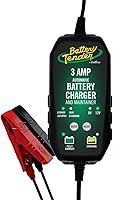
The Battery Tender 3 Amp supports 6 V or 12 V operation and lead-acid, AGM, gel, and lithium batteries, according to its stated compatibility. Confirm the setting and battery chemistry before connecting.
Don't leave a lead where it can contact a hot engine part or get caught under a hood. If a permanent lead is damaged or its fuse or connector is unclear, stop and check the instructions.
Which maintainer fits the connection you need?
Choose a maintainer by matching its voltage, battery chemistry, and connection method to your battery and vehicle. A product's connector or compatibility features don't replace checking the manuals.
When does the Battery Tender 3 Amp fit?
The Battery Tender 3 Amp fits a reader who needs a unit with both ring terminal and alligator clip options. It can be switched between 6 V and 12 V, and its stated compatibility includes lead-acid, AGM, gel, and lithium batteries.
Use the correct voltage setting and confirm that the battery chemistry is supported before plugging it in. Its LED indicates charging status, and the unit is described as spark-proof during lead connection with reverse-polarity detection.
When does the CTEK NXT 5 fit?
The CTEK NXT 5 fits a reader with a 12 V battery who wants the included U-terminal for a permanent battery mount. Its stated compatibility covers several lead-acid types and LiFePO₄ lithium-ion batteries.
The unit is fully automatic, but its instructions still call for connecting it, selecting a mode, and letting it manage charging. Check that your battery type and capacity fall within its stated range before use.
When does the Optimate 2 Duo fit?
The Optimate 2 Duo fits a reader choosing between 12 V lead-acid and 12.8 V lithium batteries. It is fully automatic and is described as stopping and warning if it detects a faulty battery.
Check the connector and the battery voltage before connecting. Its sealed case is described as protecting against spillage and light rain, but keep electrical connections dry and follow the operating instructions.
What should you check before plugging it in?
Verify polarity, voltage, battery chemistry, and cable placement before applying power. Read the manuals for any vehicle-specific steps.
- Positive clamp is on the positive terminal or designated post.
- Negative clamp is on the specified terminal or approved ground.
- Clamps are secure and separated.
- Cables are clear of moving parts, hot surfaces, and pinch points.
- The maintainer's setting matches the battery's voltage and chemistry.
- The charging location follows the manuals' ventilation and moisture guidance.
If the unit signals a fault, sparks unexpectedly, or becomes unusually hot, stop and disconnect it only as its instructions direct. Don't keep trying different connections without finding the cause.
What are common battery maintainer connection mistakes?
The main mistakes are connecting with power on, reversing polarity, guessing at a ground point, or using a mismatched mode. Any of these can harm equipment or create a safety risk.
Don't connect clamps while the maintainer is powered unless its instructions explicitly allow it. Keep metal tools and loose clamp ends away from both terminals.
A maintainer also isn't a substitute for a charger suited to a dead battery. See how to charge a dead car battery at home if the battery needs a recovery charge, and review how a battery maintainer works to understand its maintenance role.
How should you connect a maintainer for winter storage?
Connect it only after the vehicle is parked, the battery is suitable, and the storage setup follows both manuals. Secure the cables so they stay in place for the storage period.
Use a maintainer with the correct voltage and battery chemistry. Our guide to how to store a car for winter covers other steps that help prepare a parked vehicle.
Check the battery and cable connection periodically if the instructions call for it. A maintainer doesn't repair a failing battery or guarantee that a stored vehicle will start.
Which connection method should you choose?
Use the battery terminals when the manuals direct you there, or a designated remote post or chassis ground when the vehicle specifies one. Connect positive first, negative second, and AC power last; disconnect power before removing clamps.
Choose the Battery Tender 3 Amp if its dual cable suits your setup, the CTEK NXT 5 if its U-terminal and 12 V compatibility fit, or the Optimate 2 Duo for its stated lead-acid and lithium support. For the broader choice, compare battery maintainers for cars that sit.
Frequently asked questions
Do you connect positive or negative first on a battery maintainer?
With the maintainer disconnected from AC power and switched off, attach the positive clamp first. Then connect the negative clamp to the negative terminal or to an approved chassis ground point if the vehicle manual calls for one.
Follow the maintainer and vehicle instructions if they give a different sequence.
Can I connect a battery maintainer without removing the battery?
Often, yes, if the vehicle and maintainer manuals allow in-place charging and you can reach the battery safely. Use the specified terminals or ground point, keep cables clear of moving and hot parts, and don't connect a maintainer to a damaged, leaking, or frozen battery.
Where do you connect the negative clamp on a car?
Use the negative battery terminal unless the vehicle manual specifies an approved chassis ground point for charging. Some vehicles have designated remote terminals.
Don't guess at a ground point, and keep the clamp away from fuel lines, belts, fans, and other moving or hot parts.
Can a battery maintainer stay connected while the car is parked?
Many maintainers are designed for long-term maintenance, but use one only if its instructions and your vehicle manual permit it. Check that the battery type and voltage match, the cables are secure, and the storage area meets the device's ventilation and moisture guidance.