How to Store a Car for Winter Without a Dead Battery
To store a car for winter without a dead battery, start with a charged battery and use a compatible maintainer if the car will sit for weeks. Follow the car and battery manuals, and check the connection and battery during storage.
On this page (7 sections)
- How do you store a car for winter without a dead battery?
- Should you use a battery maintainer for winter storage?
- How should you connect a maintainer to a stored car?
- What if the car will be stored without an outlet?
- How often should you check a stored car battery?
- What should you do before driving the car again?
- How can you choose a winter storage charging setup?
To store a car for winter without a dead battery, begin with a charged battery and use a compatible maintainer if the car will sit for weeks. Follow the car and battery manuals, use a charger suited to the battery chemistry, and check the setup during storage.
A car that sits can lose charge even when it isn't being driven. Cold weather can also make a battery less able to start the engine, so a little preparation helps prevent a no-start surprise.
How do you store a car for winter without a dead battery?
Charge the battery, reduce avoidable electrical loads, and maintain its charge during long storage. Before connecting any charger, check the owner's manual for battery access, connection points, and storage instructions.
- Park in a dry, secure place with a suitable electrical outlet if you plan to use a maintainer.
- Switch off lights and accessories, and remove items that may draw power from a socket.
- Check the battery for damage and make sure its terminals are secure.
- Charge it with a charger compatible with its voltage and chemistry.
- Connect a maintainer according to both manuals, then check it periodically.
If you can't use a maintainer, ask your vehicle maker or a qualified mechanic how to prepare the specific car. Disconnecting the battery can affect settings or systems, so don't assume it's safe for every vehicle.
Should you use a battery maintainer for winter storage?
A compatible smart maintainer can help keep a parked car's battery charged during long storage. It monitors the battery and manages charging according to its design, rather than sending a fixed trickle of current continuously.
Check the battery label and vehicle manual before choosing one. Match the charger's voltage and battery chemistry, and use only the connection method the manuals allow.
A maintainer needs a safe place to connect and a suitable power source. Keep cords clear of doors, walkways, and moving parts, and don't use damaged equipment or connections.
If you're comparing options for a car that sits, see our guide to battery maintainers for winter storage. It focuses on features that matter when a car stays parked for a season.
Which charger suits one stored car?
The CTEK NXT 5 is a 12 V charger for lead-acid and LiFePO₄ batteries, with automatic operation and temperature compensation. Its Connect U-terminal can stay mounted to a battery for a permanent connection.
Check that your battery type and capacity fit the charger's supported range before connecting it. CTEK specifies support for batteries from about 1.2 Ah to 160 Ah.
Is the NOCO GENIUS5 a fit for winter storage?
The NOCO GENIUS5 works with 6 V and 12 V lead-acid and LiFePO₄ batteries, and includes battery clamps and eyelet terminals. Its thermal sensor adjusts charging based on ambient temperature.
Choose it only if your battery type and vehicle instructions match its charging modes. For connection steps, see how to connect a battery maintainer.
How should you connect a maintainer to a stored car?
Connect the maintainer with the car off and follow the connection order in both manuals. Some vehicles provide dedicated charging posts, while others direct you to the battery terminals.
Keep the charger unplugged until its clamps or terminals are attached as instructed. Make sure positive and negative connections are correct, and keep the charger away from fuel, water, and heat.
Don't connect a charger to a damaged, leaking, or frozen battery. If you see corrosion, loose cables, or signs of damage, get advice before charging.
For a closer look at placement and connection order, read how to connect a battery maintainer, step by step. If you're unsure whether it can stay attached, our guide to battery maintainer safety covers common precautions.
What if the car will be stored without an outlet?
Start with a fully charged battery and minimize electrical draw if no outlet is available. Check that lights and accessories are off, and remove devices that may stay powered through a vehicle socket.
Ask the vehicle maker whether its manual recommends disconnecting the battery for storage. Some cars can lose saved settings or need a specific procedure when power is removed.
Avoid relying on occasional short starts as a substitute for charging. A short run may not replace the energy used to start the engine, and idling a vehicle in an enclosed garage creates a carbon monoxide hazard.
If the battery goes flat, follow the owner's manual for charging or jump-starting. Our guide to charging a dead car battery at home explains the basic choices.
How often should you check a stored car battery?
Inspect the car and charging setup regularly, following the charger and vehicle instructions. Look for a loose connection, a damaged cord, or a warning light, and stop using the charger if anything appears unsafe.
Don't assume a charger can operate outdoors or in an unheated space just because the car is stored there. Check the charger's permitted temperature and weather conditions.
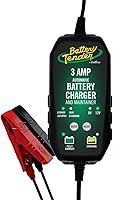
If you maintain several vehicles or spare batteries, the Battery Tender Plus 4-Bank can charge up to four 12 V batteries at 1.25 A per bank. It supports several lead-acid types and LiFePO₄ batteries.
This unit is intended for multiple batteries, so it may be more than you need for one car. Check its location and cable reach before setting up a storage area.
What should you do before driving the car again?
Inspect the battery and remove the maintainer before starting or moving the car. Follow the charger's shutdown and disconnection steps, then make sure cables and terminals are secure.
Check tire pressure, fluid levels, and the area around and under the vehicle before driving. Refer to the owner's manual for any storage return-to-service steps.
If the engine doesn't start, avoid repeated attempts that can further drain the battery. Use the vehicle manual's guidance or contact roadside help.
How can you choose a winter storage charging setup?
Choose based on how long the car will sit, the battery type, and whether you have a safe outlet. For one compatible 12 V battery, a single-battery maintainer is usually the simpler setup; a multi-bank unit is useful when several batteries need care.
The CTEK NXT 5 offers automatic 12 V charging and a permanent U-terminal option. The NOCO GENIUS5 supports 6 V and 12 V batteries and includes clamps and eyelets.
The Battery Tender Plus 4-Bank is built to charge four 12 V batteries at once.
Whichever setup you choose, confirm compatibility, follow both manuals, and check the connection during storage. For a broader comparison of cars that sit, see the best car battery maintainers, or learn how a battery maintainer works.
Frequently asked questions
Should I disconnect my car battery for winter storage?
Check your owner's manual before disconnecting the battery, since some cars need power to retain settings or operate systems. If the car will sit for weeks, a compatible maintainer may keep the battery charged without removing it.
Follow the manual's instructions for connection and storage.
How often should I start a stored car?
Starting the car briefly may not fully recharge the battery, and short runs can add wear without bringing the battery to full charge. Follow the owner's manual for storage guidance.
A compatible maintainer is a practical option when the car sits for an extended period and a safe outlet is available.
Can I leave a battery maintainer connected all winter?
Some smart maintainers are designed for long-term connection, but check the charger instructions and your vehicle manual first. Match the charger to the battery type, connect it as directed, and keep the charger and battery in the conditions their manuals allow.
Can cold weather drain a car battery in storage?
Cold weather can make a car battery less able to deliver starting power, while the car's electrical systems may continue to draw power when parked. Begin storage with a charged battery, reduce avoidable electrical loads, and consider a compatible maintainer for a car that will sit for weeks.