Are Battery Maintainers Safe to Leave Connected?
A compatible smart battery maintainer can usually stay connected when you follow its manual, connect it correctly, and use it in a suitable, dry, ventilated place. Check the battery and charger regularly, and unplug the unit if either shows damage or unusual heat.
On this page (7 sections)
- Are battery maintainers safe to leave connected?
- What makes a smart maintainer different from a trickle charger?
- How do you connect a battery maintainer safely?
- Can you leave a maintainer attached to a car battery?
- Which battery types can you maintain safely?
- When should you unplug a battery maintainer?
- Which maintainer fits a long-term connection?
A compatible smart battery maintainer can usually stay connected when you follow its instructions, connect it correctly, and use it in a suitable place. Check that the charger matches the battery's voltage and chemistry, then inspect the cables and battery during storage.
A maintainer is meant to keep a charged battery from losing charge while a vehicle sits. It isn't a fix for a damaged battery, incorrect wiring, or a location that is wet or poorly ventilated.
Are battery maintainers safe to leave connected?
Yes, many smart maintainers are designed for long-term connection, but only with a compatible battery and a setup that follows the charger and vehicle manuals. A smart unit adjusts or pauses charging as needed; a basic charger may not be designed for unattended maintenance.
Check the charger label and instructions for the supported battery type and voltage. Also check whether the vehicle maker permits charging while the battery remains connected to the vehicle.
Keep the charger and battery dry, stable, and away from open flames or sparks. Lead-acid batteries can release gas during charging, so use the ventilation and placement directions in the manuals.
A safe setup still needs occasional attention. Look for frayed cables, loose connections, corrosion, swelling, leaks, or unusual heat, and stop charging if you see any of these signs.
For the basic charging cycle, read how a battery maintainer works. It explains why a maintainer differs from a charger that keeps sending a steady current.
What makes a smart maintainer different from a trickle charger?
A smart maintainer monitors the battery and controls charging, while a simple trickle charger may keep supplying a small current. That difference matters when you plan to leave a charger attached for days or weeks.
Names can vary by brand, so look for the actual charging behavior in the manual. Confirm that the unit has a maintenance or float mode and that the maker allows extended connection.
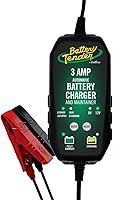
The Battery Tender 3 Amp automatically switches to float mode after charging and resumes full output if voltage drops too far under load. Its instructions still take priority for battery type, connection, and storage.
Choose a smart maintainer for long storage if its battery compatibility and instructions fit your setup. If you want a closer comparison of charging modes, see trickle charger vs battery maintainer.
How do you connect a battery maintainer safely?
Connect the clamps or ring terminals exactly as the charger and vehicle manuals specify, then verify polarity before plugging in or switching on the unit. Keep the charger off while making connections unless its instructions say otherwise.
Place the charger on a stable, dry surface with room around it. Route cords so they won't be pinched by a hood, caught by a door, or tripped over.
Don't connect a charger with damaged insulation, exposed wire, or loose clamps. Stop if the connection sparks unexpectedly, the charger reports an error, or the battery appears damaged.
NOCO says its GENIUS5 monitors the battery for maintenance charging and has a thermal sensor that adjusts charging for ambient temperature. Those features don't replace correct connection or the battery and vehicle instructions.
Follow our step-by-step guide to connecting a battery maintainer if you're unsure which terminal or vehicle connection point to use.
Can you leave a maintainer attached to a car battery?
Sometimes, but check the vehicle manual before leaving the battery connected to the car's electrical system. Vehicle makers may specify connection points or precautions for charging.
Some chargers explicitly allow charging without removing the battery, but that doesn't settle what is suitable for every vehicle. Follow the more specific instructions for your vehicle and charger, and don't guess about electronics, grounding, or terminal access.
If the battery is removed for storage, keep it upright and use a location suitable for its chemistry. Secure the charger leads so they cannot touch each other or be pulled loose.
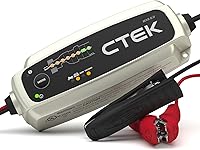
The CTEK MXS 5.0 is designed for 12V lead-acid and AGM batteries. CTEK says its float and pulse charging supports leaving it connected for months, and that the battery need not be disconnected during use.
Read the instructions for both the vehicle and charger even when the charger supports long-term use. For a vehicle that will sit through a cold season, see how to store a car for winter.
Which battery types can you maintain safely?
Use a maintainer only when it supports your battery's chemistry and voltage. Lead-acid, AGM, gel, and lithium batteries can require different charging settings.
Check the battery label or manual if you aren't sure which type you have. Don't rely on the vehicle model alone, since batteries can be replaced with a different chemistry.
The Battery Tender 3 Amp supports 6V and 12V lead-acid, AGM, and gel batteries. The product information describes selectable voltage, but does not include lithium compatibility in its listed battery types.
The NOCO GENIUS5 supports 6V and 12V lead-acid batteries, including AGM and gel, plus LiFePO4 lithium batteries. Confirm that the exact battery and charging mode are suitable before connecting it.
For more on lithium charger requirements, read what kind of charger a lithium battery needs. If you're choosing a unit for a specific battery size, what size battery maintainer you need covers the main fit questions.
When should you unplug a battery maintainer?
Unplug it if the battery, charger, or cable shows damage, unusual heat, swelling, leakage, or a burning smell. Stop using the setup and follow the charger and battery maker's guidance before reconnecting.
Also disconnect the charger before cleaning or moving the battery, unless the manuals give a different safe procedure. Switch off or unplug the charger before removing clamps, and keep the clamps from touching each other.
A battery that repeatedly loses charge may have a fault or a vehicle drain. A maintainer can keep a healthy battery topped up, but it cannot diagnose or repair the underlying cause.
Which maintainer fits a long-term connection?
For long storage, choose a smart maintainer that matches the battery and explicitly supports maintenance charging. The CTEK MXS 5.0 is one option for 12V lead-acid and AGM batteries, while the Battery Tender 3 Amp adds 6V selection for supported lead-acid types.
The NOCO GENIUS5 supports both lead-acid and LiFePO4 batteries at 6V or 12V, according to its compatibility details. Compare the requirements in your battery manual before choosing a charging mode.
Pick by battery chemistry and voltage first, then check whether the charger manual permits the length of connection you need. For use on vehicles that sit, see our guides to car battery maintainers and winter storage maintainers.
Frequently asked questions
Can you leave a battery maintainer connected all the time?
Often, yes, if the charger is designed for maintenance charging, matches the battery type and voltage, and its manual allows long-term connection. Make sure the cables are secure, the area is dry and ventilated, and the battery is in good condition.
Check both periodically and unplug if you notice damage, heat, odor, or swelling.
Can a battery maintainer overcharge a battery?
A smart maintainer is designed to manage charging after the battery reaches its target, but no charger is right for every battery or situation. Use a model compatible with your battery chemistry and voltage, follow its instructions, and don't leave a damaged battery connected.
A basic trickle charger may not regulate charging the same way.
Should you disconnect a car battery to use a maintainer?
It depends on the vehicle and charger instructions. Some maintainers allow connection without removing the battery from the vehicle, while a vehicle manual may set limits for charging attached electronics.
Check both manuals, connect to the points they specify, and avoid guessing at a ground point or terminal.
Is it safe to leave a maintainer connected indoors?
Only charge indoors when the charger and battery instructions allow it and the area is dry, ventilated, and away from flames or sparks. Lead-acid batteries can release gas while charging.
See our guide to charging a car battery indoors for setup precautions.