What Kind of Charger Does a Lithium Battery Need?
A lithium battery needs a charger made for its chemistry and voltage. For a 12V LiFePO4 battery, use a charger that names LiFePO4 compatibility and follows the battery maker's charging instructions.
On this page (8 sections)
- What kind of charger does a lithium battery need?
- How can you tell whether the battery is LiFePO4?
- Can a regular car battery charger charge lithium?
- Does a lithium charger need a special voltage?
- How many amps should a lithium charger have?
- Can you leave a lithium battery on a maintainer?
- What should you check before connecting the charger?
- Which charger fits your lithium battery?
A lithium battery needs a charger made for its chemistry and voltage. For a 12V LiFePO4 battery, choose a charger that names LiFePO4 compatibility and follow the battery maker's charging instructions.
“Lithium” covers more than one battery chemistry, so the label alone isn't enough. Check the battery manual for its chemistry, nominal voltage, allowed charging voltage, and current before you connect a charger.
What kind of charger does a lithium battery need?
Use a lithium-compatible charger with a charging profile approved for your battery chemistry. The charger must also match the battery's voltage and stay within its charging limits.
For example, a 12V LiFePO4 battery needs a charger that specifically supports 12V LiFePO4. A lead-acid charger may have a different charging profile, so don't assume that a charger will work just because its clamps fit.
Check the battery instructions and charger instructions together. If either document rules out a charging mode or voltage, follow that limit.
How can you tell whether the battery is LiFePO4?
Check the label, manual, or manufacturer information for the battery's chemistry. LiFePO4, lithium iron phosphate, is a specific type of lithium battery; it isn't a universal label for every lithium-ion battery.
Also confirm the battery's nominal voltage and charging limits. A battery sold as “12V” may require a charging voltage above 12V, so match the charger's stated output to the battery's instructions instead of relying on the nominal number alone.
If the label is missing or unclear, contact the battery maker before charging. Guessing based on battery shape or the vehicle it came from can lead to a poor charger match.
Can a regular car battery charger charge lithium?
It can only do so when the charger has a mode approved for that battery's chemistry and voltage. Some smart chargers support both lead-acid and LiFePO4; a charger without lithium support shouldn't be treated as compatible.
Look for the specific chemistry in the charger instructions, not just a general “smart” label. If you're choosing a general-purpose charger, our guide to smart battery chargers and how they work explains what smart features do and what they don't tell you about chemistry compatibility.
The NOCO GENIUS10 supports 6V and 12V lead-acid batteries and LiFePO4 batteries, according to NOCO. Check that its supported voltage and battery type fit your particular battery before use.
Don't use a lead-acid-only mode on a lithium battery unless the battery maker explicitly allows it. If you need a charger for a specific 12V lithium battery, compare the options in our guide to 12V lithium battery chargers.
Does a lithium charger need a special voltage?
Yes, its output and charging profile must fit the battery maker's limits. Nominal battery voltage and charging voltage are different values, so read both the battery and charger instructions.
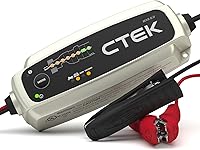
For example, the CTEK Lithium US is a 12V charger designed for LiFePO4 batteries and has a 14.4V output. CTEK describes its charging program as an 8-step process for testing, charging, and maintaining LiFePO4 batteries.
The 14.4V figure isn't a target for every lithium battery. Compare it with your battery maker's charging limits, and check whether the instructions allow the charger's maintenance mode.
How many amps should a lithium charger have?
Choose a charger whose current rating fits the battery's allowed charge rate. The battery maker's manual sets the limit; a charger with more amps doesn't automatically charge faster if the battery can't accept that current.
Charging time also depends on battery capacity and its state of charge. For help matching an amp rating to a charging goal, see how many amps you need to charge a car battery.
The NOCO GENIUS10 and LiTime 12V 10A charger both have 10A ratings, but their supported battery types and voltage differ. The NOCO supports 6V and 12V lead-acid and LiFePO4 batteries, while LiTime's charger is for 12V LiFePO4 batteries.
LiTime describes its charger as using pre-charge, constant-current, and constant-voltage stages. Its 14.6V output and 10A current still need to fit your battery's instructions.
Can you leave a lithium battery on a maintainer?
Use a maintainer only if both the battery maker and charger maker allow that maintenance method. A charger designed to maintain a lead-acid battery may not use a suitable profile for lithium.
A lithium-compatible charger may include a float or pulse maintenance mode, but that doesn't mean every battery should stay connected indefinitely. Check the battery's storage guidance and the charger's instructions for when to disconnect it.
For a broader explanation of maintenance charging, read how a battery maintainer works. If you're sizing a maintainer for another battery type, our guide to choosing a battery maintainer size covers the factors to compare.
What should you check before connecting the charger?
Check chemistry, voltage, current, and charging instructions before plugging in. The battery and charger must agree on all four.
Use this quick checklist:
- Read the battery label or manual for its chemistry, such as LiFePO4.
- Confirm the battery's nominal voltage and allowed charging voltage.
- Check its maximum charging current and compare it with the charger's output.
- Confirm the charger supports the exact chemistry and voltage.
- Follow the connection order, temperature limits, and storage guidance in both manuals.
Use the charger in the conditions its instructions allow. If you see damage, unusual heat, swelling, or an error light, stop and follow the battery maker's guidance rather than trying another charger mode.
Which charger fits your lithium battery?
Choose by battery chemistry and voltage first, then select a current rating your battery allows. A clear match in both instruction manuals matters more than a generic “smart charger” label.
The NOCO GENIUS10 may suit someone who needs a charger that supports both lead-acid and LiFePO4 batteries at 6V or 12V. The CTEK Lithium US is designed for 12V LiFePO4 batteries, while the LiTime charger is a 12V, 10A LiFePO4 option with a 14.6V output.
For any of these, confirm the battery's charging limits before connecting. If you need help comparing current ratings for a car battery, see how many amps you need to charge a car battery.
Frequently asked questions
Can I charge a lithium battery with a regular battery charger?
Only if the charger is approved for the battery's exact lithium chemistry and voltage. A charger designed only for lead-acid may use a charging profile the lithium battery maker doesn't allow.
Check the battery manual and charger instructions for a clear match before connecting them.
What voltage charger do I need for a 12V LiFePO4 battery?
Choose a charger specifically made for 12V LiFePO4 batteries, then confirm its output and charging steps match the battery maker's requirements. A nominal 12V label alone doesn't confirm compatibility; some dedicated chargers use a higher charging voltage as part of their profile.
Do lithium batteries need a trickle charger?
Usually, use a charger with a lithium-compatible maintenance mode rather than a conventional lead-acid trickle charger. Follow the battery maker's storage instructions, since leaving a charger connected may not suit every lithium battery or system.
How many amps should a lithium battery charger have?
Choose charging current within the battery maker's allowed range, using battery capacity and your available charging time as guides. A higher amp rating can shorten charging time only when the battery supports that current; the charger must also match the chemistry and voltage.