Smart Battery Chargers: How They Work and Which to Buy
A smart battery charger adjusts its output as a battery charges, then can switch to a lower maintenance mode. Match its voltage and battery chemistry to your battery, then choose charging power for how quickly you need to recharge.
On this page (7 sections)
A smart battery charger adjusts its charging as a battery fills and may switch to a lower maintenance mode when charging is complete. Choose one by matching its voltage and battery chemistry to your battery, then consider amperage and the features you need.
That makes a smart charger useful for more than charging a flat battery. A compatible model can also maintain a battery in a car, motorcycle, boat or other vehicle that sits unused.
This guide explains the main charging stages, how to match a charger to a battery, and which features can help with your use. For a charger designed mainly to keep a parked car ready, see our best car battery maintainers.
How does a smart battery charger work?
A smart battery charger changes its charging behavior as the battery’s state changes, rather than sending the same current continuously. Many models charge in stages, then move to a maintenance mode after the battery is full.
A typical charger may begin with a bulk stage, supplying current to bring the battery up to charge. It can then reduce or regulate output during absorption, before switching to float or pulse maintenance where the model supports it.
The stages and names differ by charger. Read the manual for the charger and battery, since a maintenance mode that works for one battery type may not be right for another.
A basic charger may keep supplying current without the same automatic changes. A smart charger is designed to monitor the process, though “smart” does not mean every model supports every battery or can recover a damaged one.
For more on the lower-power mode, read how a battery maintainer works. If the car sits for weeks or months, our winter storage battery maintainer guide can help narrow the type of setup.
Which batteries can a smart charger charge?
The charger must support the battery’s voltage and chemistry. Check both before buying, because a 12-volt label alone does not confirm chemistry compatibility.
Common lead-acid types include flooded, AGM and gel batteries. Some chargers support several of these, while lithium batteries such as LiFePO4 generally require a charger with a lithium-compatible mode.
Here are examples from the four chargers in this guide:
| Charger | Supported battery types in the product information |
|---|---|
| NOCO GENIUS5 | 6V and 12V lead-acid, including AGM, gel and flooded, plus LiFePO4 |
| CTEK MXS 5.0 | 12V lead-acid and AGM |
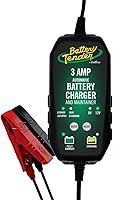
| Battery Tender 3 Amp | 6V and 12V lead-acid, including AGM and gel |
| Schumacher SC1280 15A | 6V and 12V standard, AGM, gel and deep-cycle |
If you have a lithium battery, see our guide to 12V lithium battery chargers. For motorcycle batteries, compare chargers built for that smaller vehicle category in our motorcycle battery charger guide.
What features matter in a smart battery charger?
Prioritize compatibility, charging output and the way you plan to use the charger. Extra modes can be helpful, but they do not replace checking the battery manual.
Voltage and battery chemistry
The charger’s voltage options need to match your battery. Some models support both 6V and 12V batteries, while others in this group are for 12V only.
Chemistry support matters just as much. Don’t connect a lithium battery to a charger unless the charger explicitly supports that chemistry and voltage.
Amperage and charging speed
Amperage affects how quickly a compatible battery can charge, but higher output is not automatically better for every battery. Follow the battery maker’s charging guidance and consider whether you need faster charging or routine maintenance.
The options here range from 3A on the Battery Tender to 15A on the Schumacher SC1280. For more help with output, read how many amps you need to charge a car battery.
Maintenance mode
A maintenance mode can help keep a fully charged battery ready while a vehicle is stored. Check how the charger handles maintenance and whether its instructions allow extended connection for your battery type.
The CTEK MXS 5.0 uses float and pulse charging, and Battery Tender describes its 3 Amp model as switching to float mode after charging. For safe setup and use, see how to connect a battery maintainer.
Temperature adjustment and recovery modes
Temperature compensation adjusts charging based on ambient conditions. The NOCO GENIUS5 has an integrated thermal sensor that adjusts its charge based on temperature.
Some chargers also offer a reconditioning or desulfation mode. These are not a promise to restore every battery.
If a battery is damaged or will not hold a charge, a charger’s recovery feature may not solve the underlying problem.
Cable connections and placement
Check the cable reach and connection options against where the vehicle is parked. Clamps are useful for a temporary connection, while eyelet terminals can remain attached to the battery for repeat use when the charger supports them.
Use a charger in the way its manual allows, and keep the charger and cables positioned as instructed. Our guide on charging a car battery indoors covers practical location and safety questions.
Which smart battery charger should you choose?
Choose the charger that matches your battery and main use, rather than picking by amperage alone. These four options cover mixed battery types, lead-acid maintenance and higher-output charging.
How should you match a charger to your use?
Match the battery first, then the vehicle and charging routine. This keeps a charger’s features tied to a real need.
For a car that sits unused
A car that sits for weeks may benefit from a compatible smart charger with a maintenance mode. Confirm it supports the car’s battery chemistry and voltage, and follow the charger instructions for longer connection.
The NOCO GENIUS5 and CTEK MXS 5.0 both include maintenance functions, though they support different battery types. Compare more options in our car battery maintainer picks.
For winter storage
Choose a charger that matches the battery and supports the maintenance routine you plan to use over storage. Place the charger and cables where they remain protected and accessible, then check them as directed.
Our winter storage maintainer guide focuses on keeping a stored vehicle’s battery ready. If you are preparing the whole vehicle for the season, see how to store a car for winter.
For a motorcycle or powersports battery
Check the battery’s voltage and chemistry, since motorcycles and powersports vehicles can use different battery types. A 6V/12V charger with chemistry support that matches your battery can be more useful than simply choosing the highest amperage.
The NOCO GENIUS5 supports motorcycle and powersports batteries across the compatible types listed for it. See our best battery chargers for motorcycles and powersports for more focused options.
For a battery that needs a faster recharge
A higher amperage charger may suit a compatible battery when charging speed matters. Confirm the battery’s recommended charging current before using a higher-output option.
The Schumacher SC1280 provides 15A and supports several 6V and 12V battery types. It is a better fit for someone who needs more output than a small maintainer, provided the battery supports the charging approach.
How do you use a smart charger safely?
Use a smart charger only with a compatible battery and according to its manual. Correct connections, a suitable location and the right charging mode matter.
Before connecting, identify the battery voltage and chemistry. Turn off the vehicle and charger as instructed, connect the leads to the correct terminals, and keep clamps from touching each other.
Use the charger in a dry, ventilated location when the manual calls for it. Do not charge a battery that is visibly damaged, leaking or unusually hot; get qualified help if you are unsure about its condition.
Follow the charger’s directions for disconnecting. For a longer connection, confirm that the model’s maintenance mode and instructions permit it with your battery.
Is a smart battery charger worth buying?
A smart charger is useful if you want one device to charge and maintain a compatible battery. It can be especially practical for vehicles that sit between uses, as long as voltage and chemistry match.
For a car owner with a lead-acid battery, the CTEK MXS 5.0 offers 12V charging and float/pulse maintenance. For a mix of 6V, 12V lead-acid and LiFePO4 batteries, the NOCO GENIUS5 has broader chemistry support.
Choose the Battery Tender 3 Amp if its 3A output and 6V/12V lead-acid support fit your routine. Choose the Schumacher SC1280 when its 15A output and additional functions suit the battery and charging pace you need.
Start with the battery label and manual, then compare chargers by supported chemistry, voltage and intended use. A smart battery charger is only the right choice when those details line up.
Frequently asked questions
What does a smart battery charger do?
A smart battery charger monitors charging and adjusts how it charges as the battery fills. Many models also switch to a maintenance mode that helps keep a charged battery ready.
Check the charger’s supported voltage and chemistry against your battery before connecting it.
Can I leave a smart battery charger connected?
Some smart chargers are designed to stay connected in maintenance mode, but follow the specific charger instructions and confirm the battery type is supported. A charger that can maintain one chemistry or voltage may not be suitable for another.
Check the cables and connections before leaving it in place.
Can one smart charger charge both lead-acid and lithium batteries?
Some models support both, while others are designed only for lead-acid batteries. For example, the NOCO GENIUS5 supports lead-acid and LiFePO4 batteries, while the CTEK MXS 5.0 is for 12-volt lead-acid and AGM batteries.
Match the charger to the exact chemistry.
How many amps should a smart battery charger have?
Choose amperage based on battery capacity and how soon you need it charged, while following the battery maker’s guidance. Lower output can suit maintenance or slower charging, while higher output can shorten charge time for compatible batteries.
A 15A charger still needs to match the battery and use.
Will a smart charger charge a completely dead battery?
It depends on the charger. The NOCO GENIUS5 says it can charge down to 1 volt and offers a Force Mode for batteries at zero volts.
That does not mean every depleted battery can be recovered, so check the battery condition and follow the charger instructions.