When Should You Use a Trickle Charger?
Use a trickle charger when a compatible battery needs a slow charge, or when its instructions allow safe long-term maintenance. For a vehicle that sits, a smart maintainer is usually the simpler choice because it monitors the battery.
On this page (6 sections)
Use a trickle charger when a compatible battery needs a slow charge, or when the charger is built to maintain that battery during storage. For a vehicle that will sit for weeks, a smart maintainer is often a better choice because it monitors the battery instead of supplying a fixed low current.
A trickle charger can help counter the gradual loss of charge in a parked car, motorcycle, boat, or lawn tractor. The right choice depends on the battery type, how long the vehicle will sit, and whether the charger can safely remain connected.
When should you use a trickle charger?
Use one when the battery needs slow charging or approved storage maintenance. Check the battery and charger instructions first for voltage, battery chemistry, and whether continuous connection is allowed.
A basic trickle charger supplies a low, steady current. That can suit a battery that needs a gradual charge, but a charger without automatic monitoring may keep charging after the battery is full.
For a vehicle that sits often, a smart charger with a maintenance mode can reduce that concern. Read how a battery maintainer works to understand how monitoring differs from a steady trickle.
Which vehicles and situations benefit from a trickle charger?
A trickle charger can help with vehicles that spend long stretches parked, especially when short trips or onboard electronics gradually drain the battery. Common examples include seasonal cars, motorcycles, ATVs, boats, and lawn equipment.
The charger must match the battery. Check whether it supports the battery's voltage and chemistry, such as lead-acid, AGM, or lithium, before connecting it.
NOCO says its GENIUS5 adjusts charging based on ambient temperature and monitors the battery for maintenance. It supports 6-volt and 12-volt lead-acid batteries, including AGM, and LiFePO4 batteries.
If the battery is already deeply discharged, don't assume a slow charger will bring it back. See how to charge a dead car battery at home for the checks to make before charging.
Should you use a trickle charger for a car that sits?
Use one for a parked car only if its instructions permit the connection and the charger suits the battery. If the car will sit for weeks, a smart maintainer designed for long-term connection can be easier to manage.
First check the owner's manual for battery access and charging points. Then consider whether the car's electronics draw power while parked, and whether you can keep the charging area dry and ventilated.
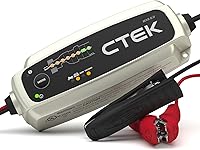
CTEK describes the CT5 as suitable for lead-acid batteries, including AGM, and lists a reconditioning mode. Its stated compatible devices include motorcycles, ATVs, JetSkis, and snowmobiles.
For longer parking periods, compare the charger approach with battery maintainers for cars that sit. Choose a unit whose instructions clearly cover your battery and storage setup.
Is a trickle charger useful for motorcycles and powersports?
It can be useful when a motorcycle, ATV, or personal watercraft sits between rides, as long as the charger supports its battery. Small batteries are especially important to match with the right voltage and charging mode.
OptiMate describes the OptiMate 3 as an automatic 12V charger for AGM, gel, standard, starter, and deep-cycle batteries. Its stated uses include motorcycles, ATVs, side-by-sides, and personal watercraft.
If you ride only in certain seasons, see battery chargers for motorcycles and powersports for more options. For a long storage period, follow the vehicle and battery makers' instructions about disconnecting or maintaining the battery.
When is a smart maintainer a better choice?
A smart maintainer is usually a better fit when you want to leave a battery connected during storage. It monitors battery condition and changes or stops charging according to its design.
A basic trickle charger may continue supplying current at a steady rate. That can overcharge a battery if the charger isn't intended for continuous connection or the battery is left attached too long.
The difference depends on the specific charger, so read its instructions rather than relying on the name alone. Our guide to trickle chargers versus battery maintainers explains the distinction.
Can a trickle charger stay connected all winter?
Only leave it connected if the charger and battery instructions allow long-term use. A charger labeled as a maintainer may be designed to monitor the battery, while a basic trickle charger may not be.
Keep the charger and battery in the conditions their makers specify. Inspect cables and connections, and stop using the equipment if you see damage, unusual heat, or signs of a battery problem.
For a stored car, pair the charging plan with winter storage steps that help prevent a dead battery. If you leave a maintainer connected, review whether battery maintainers are safe to leave connected for practical checks.
How do you choose the right trickle charger?
Choose by battery voltage, chemistry, and intended use, then confirm whether the charger supports unattended maintenance. A charger that works for one battery type may not suit another.
Check the battery label and manual for its chemistry and voltage. Compare those details with the charger instructions, including whether it offers a mode for the battery you own.
Current also matters. A lower-current charger may take longer to recharge a depleted battery, while a higher-current charger may be unnecessary for maintaining a small powersports battery.
If you're unsure about charging rate, read how many amps you need to charge a car battery. For a vehicle that sits, prioritize clear maintenance guidance over a high charging current.
What safety steps should you follow?
Follow the charger and vehicle manuals, and connect the clamps only to the approved points. Keep the charger away from rain and standing water, and avoid charging a damaged or leaking battery.
Before connecting, switch the charger off if its instructions call for it. Attach the leads in the order the manual specifies, keep clamps from touching each other, and place the charger where it can stay dry.
Use a well-ventilated area when charging lead-acid batteries. For indoor charging questions, see whether it is safe to charge a car battery indoors.
When should you use a trickle charger instead of replacing the battery?
Use a charger to maintain a healthy battery or recharge a discharged one, not to assume an aging or faulty battery will recover. If the battery repeatedly goes flat or the charger indicates a fault, have the battery and vehicle charging system checked.
A battery that won't hold charge may be worn, damaged, or drained by a vehicle problem. Charging can restore its state of charge, but it cannot guarantee the battery will perform reliably afterward.
For occasional storage, choose a charger suited to the battery and follow its instructions. For long-term parking, a compatible smart maintainer is often the better choice, and how to use a trickle charger on a car covers the connection process.
Frequently asked questions
When should I use a trickle charger?
Use one when a compatible battery needs a slow charge, or when the charger is designed to maintain that battery during storage. Check the battery and charger instructions first.
For a vehicle left parked for weeks, a smart maintainer that monitors charge may be a better fit than a basic charger that keeps supplying current.
Can I leave a trickle charger connected overnight?
Only if the charger and battery instructions allow it. A basic trickle charger may keep supplying current after the battery is full, so check its controls and guidance before leaving it connected.
A smart charger or maintainer can monitor the battery, but you should still follow its safety instructions.
Is a trickle charger the same as a battery maintainer?
No. A trickle charger supplies a low, steady charge, while a maintainer is designed to monitor the battery and adjust or stop charging as needed.
Some smart chargers offer both charging and maintenance modes, so read the instructions to see which mode is active.
Can I use a trickle charger on a motorcycle battery?
Yes, if the charger supports the motorcycle battery's voltage and chemistry. Small powersports batteries can benefit from a compatible low-current charger during storage, but follow the battery maker's guidance and use the correct connection method.
A smart charger made for motorcycle batteries can simplify long periods between rides.