How to Use a Trickle Charger on a Car
To use a trickle charger on a car, check battery and charger compatibility, connect the leads with power off, then plug in the charger. Follow both manuals, keep the battery ventilated, and disconnect in the order the charger specifies.
On this page (8 sections)
To use a trickle charger on a car, check compatibility, connect the leads with the charger off, then switch it on. Follow the charger and vehicle manuals, keep the battery ventilated, and disconnect in the order the charger specifies.
A trickle charger supplies a low current to charge a battery slowly. Some smart chargers also switch to a maintenance mode after charging, so first check which type you have.
How do you use a trickle charger on a car?
Use the charger’s instructions and the car manual to guide the connection. The exact steps can vary by vehicle, battery type, and charger design.
- Park the car in a dry, ventilated place, switch it off, and remove the key.
- Confirm the charger supports the battery’s voltage and chemistry.
- Make sure the charger is off and unplugged from the outlet.
- Connect the positive lead to the positive battery terminal or the vehicle’s specified positive charging point.
- Connect the negative lead to the specified ground point or negative terminal, as directed by the manuals.
- Check that the clamps are secure and clear of moving parts.
- Plug in the charger and select the correct battery mode, if it has one.
- When charging is complete, turn off and unplug the charger, then remove the leads in the order its manual specifies.
If you’re unsure where to connect on your car, use the vehicle manual’s jump-start or battery-charging instructions. Our step-by-step guide to connecting a battery maintainer covers the same connection basics in more detail.
What should you check before charging?
Match the charger to the battery’s voltage and chemistry before connecting it. Read the battery label and charger manual, and don’t guess if either is hard to identify.
Many car batteries are 12V lead-acid batteries, but the right charger setting still depends on the battery type. Some chargers support AGM or lithium batteries, while others don’t.
Look for damage, swelling, leaks, or corrosion before charging. If you see a damaged battery, stop and get advice from a qualified mechanic or battery service professional.
Use a dry, well-ventilated location away from flames and sparks. Charging a battery can release gas, so avoid smoking or using open flames nearby.
Can you charge a car battery without disconnecting it?
Only do so if the car and charger manuals allow it. Some chargers are designed to charge a connected vehicle battery, but vehicle electronics and charging points differ.
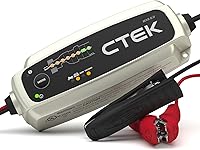
The CTEK US 0.8 is described as suitable for maintenance charging of normal-sized batteries, including classic car batteries, and as designed to avoid damage to vehicle electronics without disconnecting the battery. Still, check your vehicle manual for its approved connection points.
How do you connect the clamps safely?
Connect the positive lead first, then the negative lead at the point specified by your manual. Keep the charger unplugged until both leads are secure.
Battery terminals are marked positive (+) and negative (−). Don’t let the clamps touch each other or bridge both terminals at once.
If the vehicle manual specifies a chassis ground instead of the negative battery terminal, follow that instruction. It can help reduce the chance of a spark near the battery.
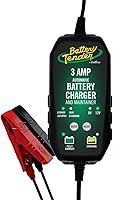
The Battery Tender 3 Amp includes a ring terminal and alligator clip combo cable, and its lead connection is described as spark-proof with reverse-polarity detection. These features don’t replace checking the polarity or following the manuals.
For more detail on lead placement and removal, see how to connect a battery maintainer, step by step.
Which charger mode should you choose?
Choose a mode that matches the battery type and voltage. If the charger has no setting for your battery, don’t use it until you confirm compatibility.
The NOCO GENIUS5 supports 6V and 12V lead-acid batteries, including AGM, gel, and flooded types, as well as LiFePO4 lithium batteries. Its thermal sensor adjusts charging based on ambient temperature, according to NOCO.
Do not select a lithium setting for a lead-acid car battery, or a lead-acid setting for a lithium battery. If the battery chemistry or charger mode is unclear, pause and check the manuals.
A charger with a lower current may take longer to charge a depleted battery. For help choosing a charging rate, see how many amps you need to charge a car battery.
How long should a trickle charger stay connected?
Follow the charger manual for the charge time and whether it can remain connected. A basic trickle charger and a smart charger can behave differently after the battery is charged.
Some smart chargers automatically switch to float or maintenance mode. For example, Battery Tender says its 3 Amp model goes into float mode after charging and resumes full output if voltage drops too far under load.
A charger that keeps sending current without monitoring can overcharge a battery if left attached too long. Don’t assume “trickle” means safe to leave connected indefinitely.
See when to use a trickle charger for situations where a slow charge or maintenance charge may fit. Our guide to trickle chargers versus battery maintainers explains why the names can describe different charging behavior.
When should you stop charging and disconnect?
Stop if the battery or charger gets unusually hot, smells odd, smokes, or shows damage. Turn off and unplug the charger if you can do so safely, and get professional advice before trying again.
When charging is finished, switch off and unplug the charger before removing the clamps. Follow its manual for removal order, and keep the clamps from touching each other or metal parts.
If you plan to leave the charger connected while the car sits, first confirm that its manual permits extended maintenance use. Read whether battery maintainers are safe to leave connected for more on that choice.
Which trickle charger should you use on a car?
Choose a charger based on battery compatibility, connection options, and whether you need a charge-only or maintenance function. The NOCO GENIUS5 supports multiple battery types and voltages, the Battery Tender 3 Amp offers 6V or 12V charging with float mode, and the CTEK US 0.8 is a 12V charger suited to smaller lead-acid batteries and maintenance charging.
Before choosing, identify your battery chemistry and read your car manual’s charging directions. Pick a smart charger with a compatible maintenance mode if you need to keep a parked car’s battery charged over time, and review battery maintainers for cars that sit for more options.
FAQ
Can a trickle charger start a car?
No, a trickle charger is for charging or maintaining a battery, not starting the engine. If the battery is too weak to crank, use a jump starter or get help from a roadside service.
Follow your car manual’s jump-start instructions and check the battery if it keeps losing charge.
Can you use a trickle charger in the rain?
Keep the charger and its electrical connections dry unless its manual specifically allows outdoor use. Rain can create shock and short-circuit risks around powered equipment.
If you need to charge outdoors, check the charger’s weather limits and use a dry, protected setup.
Should you remove the car battery before charging it?
Not always, but follow your vehicle and charger manuals. Some chargers support charging a battery while it remains connected to the vehicle, while some vehicles specify different steps or connection points.
Disconnecting a battery can also affect vehicle settings, so don’t remove it without checking first.
Frequently asked questions
How long should you leave a trickle charger on a car battery?
Use the charger’s instructions to decide how long it can stay connected. Some smart chargers switch to a maintenance mode after charging, while a basic trickle charger may keep sending current.
Check the battery type and charger settings, and disconnect when the manual says the job is complete.
Do you connect a trickle charger with the car on or off?
Connect a trickle charger with the car and charger off, unless the vehicle or charger manual gives different directions. Attach the leads to the correct battery points, check the connections, then power the charger.
Turn it off and unplug it before removing the leads.
Can you use a trickle charger on an AGM car battery?
You can use a charger on an AGM battery only if it supports that battery type and its voltage. Choose the correct mode before charging, and follow the car and charger manuals.
A charger set for the wrong battery chemistry may not charge it correctly.
Is it safe to leave a trickle charger connected overnight?
It depends on the charger. A smart charger with a maintenance mode may be designed for extended connection, while a basic trickle charger can overcharge a battery if left connected.
Check the manual for overnight use, ventilation, and monitoring instructions before leaving it attached.