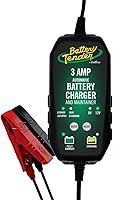
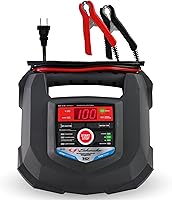
NOCO Genius10 vs Schumacher SC1281: Which Is Better? (October 2026)
Choose the NOCO Genius10 for lithium battery support and a compact charger; choose the Schumacher SC1281 for engine starting, boost charging and battery tests. Both charge and maintain 6V and 12V lead-acid batteries.
On this page (7 sections)
Choose the NOCO GENIUS10 for lithium support and temperature compensation; choose the Schumacher SC1281 for engine starting, boost charging and battery tests. In this NOCO Genius10 vs Schumacher SC1281 comparison, your battery type and need for a starting feature matter most.
The GENIUS10 is a 10A smart charger for 6V and 12V lead-acid and LiFePO4 batteries. The SC1281 charges and maintains 6V and 12V batteries, and adds a 100A engine-start mode, boost charging, and battery and alternator testing.
If you want a charger for regular maintenance, both are candidates. If you want an engine-start feature, only the SC1281 has one of these two.


NOCO Genius10 vs Schumacher SC1281: which should you choose?
Choose the GENIUS10 for LiFePO4 support and a 10A charging output; choose the SC1281 for engine starting and built-in tests. Their shared support for 6V and 12V batteries doesn't make their other features interchangeable.
The GENIUS10 supports lead-acid battery types including AGM, gel, SLA, VRLA and flooded batteries, as well as LiFePO4. It has an integrated thermal sensor that adjusts charging based on ambient temperature, plus Force Mode for manually charging a battery down to zero volts.
The SC1281 has a 2A to 6A charging range, a 12A to 30A boost mode and a 100A engine-start mode. Its functions also include battery and alternator testing, automatic 6V and 12V detection, and a smart trickle charge.
Schumacher identifies the SC1281 as compatible with standard, AGM, gel and deep-cycle batteries. Its product description also mentions 12V lithium, which conflicts with the compatibility list.
Confirm battery compatibility in the user manual before using the SC1281 with lithium.
Which charger fits your battery type?
The GENIUS10 is the clearer choice when you need one charger for lead-acid and LiFePO4 batteries. Both units support 6V and 12V, but their stated chemistry support differs.
The GENIUS10 covers 6V and 12V lead-acid batteries and LiFePO4 batteries. That can help if you maintain different battery types in a car, boat or powersports vehicle.
Schumacher's SC1281 compatibility list names standard, AGM, gel and deep-cycle batteries. Because its product description and compatibility list differ on lithium, check the manual for the exact battery type you have.
Is the Genius10 a 12V lithium battery charger?
The GENIUS10 supports LiFePO4 batteries at 6V and 12V. If you're comparing chargers for a 12V lithium battery, its listed chemistry support is more direct than the SC1281's conflicting information.
Our guide to 12V lithium battery chargers explains what to check before choosing a charger. For a broader overview of chemistry and charger choice, read what kind of charger a lithium battery needs.
Does 6V support make these interchangeable?
No. A matching voltage is one requirement, but battery chemistry and the intended charging mode also need to fit.
Check the battery label and the charger manual before connecting either unit.
The SC1281 has automatic 6V and 12V detection. The GENIUS10 supports both voltages, and has separate modes and Force Mode; follow its manual to select and use them safely.
Which one charges a battery faster?
The GENIUS10 has the higher stated regular charging output at 10A; the SC1281's regular charge range is 2A to 6A. Actual charging time depends on the battery and its condition, so output alone doesn't promise a specific result.
The SC1281 offers a separate 12A to 30A boost mode. That is a different charging mode, not a like-for-like comparison with the GENIUS10's 10A charging output.
Use the charger manual to choose a suitable mode for the battery. If you need a charger in the 10A range, see our guide to 10A battery chargers.
Does the Genius10 charge a dead battery?
The GENIUS10 can charge batteries from 1V and has Force Mode for manually charging a battery down to zero volts. Force Mode requires manual operation, so follow the instructions carefully and make sure the battery is suitable to charge.
The SC1281 provides boost charging and an engine-start mode. These features serve different needs; an engine-start mode isn't the same as fully charging a battery.
For home charging steps, see our guide on how to charge a dead car battery.
Which has more features for a garage?
The SC1281 offers more built-in vehicle-starting and diagnostic functions; the GENIUS10 combines charging, maintenance and battery restoration features. Pick by the tasks you expect to do, not by the number of modes.
The SC1281 can start, charge, maintain, test and restore batteries. Its battery and alternator testing can help you check the charging system, while its 100A engine-start and boost modes address starting and charging needs.
The GENIUS10 includes temperature compensation, Force Mode and pulse charging intended to reverse sulfation and acid stratification. NOCO also describes it as a charger, maintainer, trickle charger and desulfator.
Neither replaces diagnosis when a battery or vehicle has a fault. Use the charger manual for setup and modes, and consult a qualified technician if the battery or charging system needs repair.
Which is easier to set up and leave connected?
The GENIUS10 is lighter and includes both clamps and eyelet terminals; both chargers offer smart maintenance charging. Compare the connection style you need and plan where the charger will sit.
The GENIUS10 weighs 4 lb and includes battery clamps with integrated eyelet terminals. Its 72 in AC cable and 80 in DC cable give you a basis for checking whether it can reach from an outlet to your battery location.
The SC1281 weighs 12.7 lb and uses crocodile clips. It has a smart trickle charge that maintains voltage over time, while the GENIUS10 continuously monitors the battery for maintenance and can remain connected indefinitely, according to NOCO.
For either model, follow the manual for placement, connection and maintenance charging. Our guide to connecting a battery maintainer walks through the basic setup decisions.
Is the Schumacher SC1361 a better alternative?
The SC1361 is an alternative if you need 12V charging with a 50A engine-start mode and 10A boost. It doesn't offer the SC1281's 6V support, 100A engine-start mode or battery and alternator testing.
Like the SC1281, the SC1361 charges and maintains with a 2A to 6A range and smart trickle charging. It supports standard and AGM 12V batteries and includes reverse hook-up protection.
Its smaller boost and starting figures may suit a 12V garage setup that doesn't need the SC1281's added features. It doesn't match the GENIUS10's stated support for 6V batteries and LiFePO4.
Which battery charger should you pick?
Choose the GENIUS10 for LiFePO4 support, temperature compensation and a lighter charger; choose the SC1281 for engine starting, boost charging and battery or alternator tests. For a 12V-only setup that needs a smaller starting mode, consider the SC1361.
If your priority is a higher regular charge output, the GENIUS10's 10A rating exceeds the SC1281's 2A to 6A regular range. If you need a charger for several vehicles or battery types, check how many amps you need to charge a car battery and confirm the charger supports each battery.
See our comparison of the NOCO GENIUS10 and GENPRO10 if you're weighing a portable charger against an onboard marine option. For a different brand comparison focused on maintenance charging, read Schumacher vs Battery Tender.
Pick the GENIUS10 when its chemistry support and temperature sensor match your batteries. Pick the SC1281 when its starting and testing features are the ones your garage needs.
Frequently asked questions
Is the NOCO Genius10 better than the Schumacher SC1281?
The NOCO GENIUS10 is a better fit if you need LiFePO4 support, a 10A charger or temperature compensation. The Schumacher SC1281 fits drivers who want a 100A engine-start mode, boost charging and battery or alternator testing.
Choose based on the feature you expect to use.
Can the NOCO Genius10 charge lithium batteries?
Yes, the GENIUS10 supports 6V and 12V lead-acid batteries and LiFePO4 lithium-ion batteries. The SC1281's listed battery compatibility covers standard, AGM, gel and deep-cycle types, but not lithium.
Confirm that the battery voltage and chemistry match the charger before connecting it.
Can the Schumacher SC1281 start a car?
The SC1281 has a 100A engine-start mode, along with 12A to 30A boost charging and a 2A to 6A charge range. Engine-start modes have their own limits and instructions, so check the user manual and your vehicle requirements before using that feature.
Which charger is better for maintaining a stored car?
Both models offer smart maintenance charging. The GENIUS10 has a 10A output, a temperature sensor and included eyelet terminals; the SC1281 offers a smart trickle charge and automatic voltage detection for 6V and 12V batteries.
Choose terminals that fit your setup and follow the manual for long-term connection.
Does the Schumacher SC1281 support 6V batteries?
Yes, the SC1281 detects 6V and 12V batteries automatically. The GENIUS10 also supports both voltages.
Check the battery label before charging, then follow the charger manual for the correct connection and mode.