Can a Trickle Charger Drain a Battery?
Yes, a trickle charger can drain a battery in two common cases: a basic charger left plugged in past full charge keeps pushing current, and a charger left unplugged lets its electronics draw from the battery. A smart maintainer shuts off at full charge and stops this.
On this page (9 sections)
- Why a trickle charger might drain a battery
- How does an unplugged trickle charger drain a battery?
- What happens when a trickle charger overcharges a full battery?
- How is a smart maintainer different from a basic trickle charger?
- Which charger is the safest for long-term storage?
- Can a trickle charger drain a battery through a bad connection or wiring?
- How should you connect and store a trickle charger to avoid drain?
- Trickle charger vs float charger: which one avoids the drain?
- So, can a trickle charger drain a battery?
Yes, a trickle charger can drain a battery in two common cases: a basic charger left plugged in past full charge keeps pushing current, and a charger left unplugged lets its electronics draw from the battery. A smart maintainer shuts off at full charge and stops this.
The answer matters for anyone storing a car, bike, or mower for months. A trickle charger is simple, and that simplicity is exactly where the drain risk comes from.
Why a trickle charger might drain a battery
A trickle charger drains a battery when it keeps charging past full or when it stays connected with no power. Both problems come from a lack of voltage monitoring.
A basic trickle charger sends a small fixed current and never checks the battery's state. A full battery keeps absorbing that current as heat and gassing, and the water inside the cells slowly drops.
The second case is subtler. Many chargers have a transformer and status lights that draw a little power even when the wall plug is out.
That draw comes straight from the battery, and over weeks it adds up.
So the question "can a trickle charger drain a battery" has a clear answer: yes, unless the charger is designed to watch voltage and stop on its own.
How does an unplugged trickle charger drain a battery?
A charger left clamped on with its cord unplugged can pull a standby current from the battery. The unit's lights and internal electronics stay alive on battery power.
That current is small, often a few milliamps. Over a month or two, though, it can take a healthy battery down to a level where the car won't start.
A battery already weak from age or cold weather goes flat faster.
The fix is simple: pull the clamps off the battery whenever the charger is not plugged into the wall. Don't leave a charger hanging on the terminals as a storage bracket.
If your charger has a quick disconnect harness, use it. That makes removing the charger from the battery a one-hand job and removes the drain risk in storage.
What happens when a trickle charger overcharges a full battery?
Overcharging breaks down the battery's water and plates over time, and the damage is often permanent. A basic charger keeps pushing current into a battery that can't take more.
The water in the electrolyte turns to gas and escapes through the vents. Once the plates are exposed, sulfation sets in and capacity drops.
A battery treated this way may still start the car for a while, then fail without warning.
Heat is the other cost. A battery that sits warm for weeks ages faster than one kept cool.
In hot weather the effect is stronger.
The smart fix is a charger that ends the charge when voltage hits a set point. That's the core difference between a basic trickle charger and a maintainer, covered in our guide to trickle charger vs battery maintainer.
How is a smart maintainer different from a basic trickle charger?
A smart maintainer checks the battery voltage and switches between charging and float modes, so it can't overcharge. A basic trickle charger has no such control.
The NOCO GENIUS5 is built this way. NOCO says it monitors the battery constantly and lets you leave it connected indefinitely without overcharging.
Its integrated thermal sensor adjusts the charge for ambient temperature, which matters in hot garages.
It also charges batteries from as low as 1 volt and has a Force Mode for completely dead ones. That makes it useful for a neglected battery that a basic trickle charger would give up on.
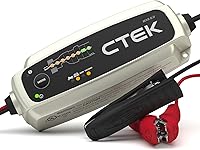
The CTEK MXS 5.0 takes a similar set-and-forget approach. CTEK's patented float and pulse charging lets it stay connected for months without harming the battery, and its 8-step program covers charging, conditioning, and a reconditioning mode for underperforming batteries.
Which charger is the safest for long-term storage?
A maintainer with voltage monitoring is the safe choice for storage, and the NOCO GENIUS5 is the strongest all-round pick here. It handles 6V and 12V lead-acid and lithium batteries, and NOCO says it can stay connected indefinitely.
The GENIUS5's temperature sensor is the detail that sets it apart. A charger without it can overcharge in summer and undercharge in winter, because battery voltage changes with temperature.
NOCO's sensor adjusts the profile to match.
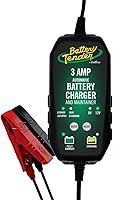
The Battery Tender Plus 1.25 Amp is the gentler option for small batteries. Its 4-step program charges and then floats, and Battery Tender says it's smarter than a trickle charger for that reason.
Its 1.25A output suits motorcycle and powersport batteries better than large car batteries.
For a big diesel bank or a deeply drained battery, a higher-output charger recovers faster. For months of storage on a car or bike, the maintainer approach wins.
Can a trickle charger drain a battery through a bad connection or wiring?
Yes, a poor connection or a parasitic draw elsewhere can pull a battery down even with a good charger. The charger gets blamed, but the wiring or the vehicle is the real cause.
Check the clamps for corrosion and tightness. A loose clamp adds resistance and can cause the charger to misread voltage.
Ring terminals bolted to the battery posts should be clean and snug.
Also check the vehicle. A dome light, a faulty module, or an aftermarket radio can drain a battery in storage faster than any charger draws.
Disconnect the negative cable if the car sits for months without a maintainer.
Finally, check the charger's own cord and plug. A damaged cord or a plug that doesn't seat can leave the unit half-powered.
For fire safety basics around any charger, see can a battery charger cause a fire.
How should you connect and store a trickle charger to avoid drain?
Clamp the charger to the battery only while it's plugged in and charging, and use a maintainer for storage. That one habit removes most drain risk.
Connect the positive clamp first, then the negative, and keep the charger off a wet floor. Plug it in and confirm the status light shows charging.
When the light shows full or float, the charger has done its job.
For storage charging, choose a maintainer and leave it connected. For a basic trickle charger, unplug and remove it once the battery is full.
For step-by-step instructions, see how to use a trickle charger on a car.
If your charger has no automatic shutoff, set a reminder to disconnect it. A weekly check is enough for most storage setups.
That small habit protects the battery and the charger.
Trickle charger vs float charger: which one avoids the drain?
A float charger holds a full battery at a steady voltage without overcharging, and that's what you want for storage. A basic trickle charger without a float stage is the one to watch.
A float charger drops to a lower voltage once the battery is full and holds it there. It tops up as the battery self-discharges and stops pushing current when the voltage is right.
That's the behavior that avoids the drain and overcharge problems.
Many smart maintainers include a float stage. The CTEK MXS 5.0 and Battery Tender Plus both switch to a float or pulse mode at full charge.
A plain trickle charger may not have that stage at all.
Our comparison of trickle charger vs float charger explains the difference in more detail. The practical rule: buy a charger with a float or maintenance stage, not a fixed trickle output.
So, can a trickle charger drain a battery?
Yes, a basic trickle charger can drain a battery when it's left unplugged but connected, or when it keeps charging past full. A smart maintainer avoids both problems by monitoring voltage and stopping at full charge.
Pick the NOCO GENIUS5 for most storage jobs: it handles 6V and 12V, adjusts for temperature, and NOCO says it can stay connected indefinitely. Pick the Battery Tender Plus 1.25 Amp for a motorcycle or small battery that needs a gentler 4-step charge.
Pick the CTEK MXS 5.0 if you want an 8-step charger with a reconditioning mode for a tired battery.
The habit that matters most: remove a basic charger from the battery when it's not plugged in. A maintainer lets you leave it connected without that worry, which is the whole point of storage charging.
Frequently asked questions
Can a trickle charger drain a battery that's already full?
A basic trickle charger with no shutoff can keep pushing a small current into a full battery, which causes gassing and water loss over time. A smart maintainer stops charging at full and only resumes when voltage drops, so it won't drain or overcharge.
How long can I leave a smart maintainer connected?
A smart maintainer like the NOCO GENIUS5 or Battery Tender Plus is built to stay connected indefinitely for storage charging. It monitors the battery and only tops it up when needed.
Basic trickle chargers without that control are not meant for long-term connection.
Does a trickle charger drain a battery faster than it charges?
Not while it's plugged in and working correctly; it charges more than it draws. The drain happens when it's unplugged but still connected, or when a failing basic charger keeps charging past full and damages the battery through overcharging.
What is the difference between a trickle charger and a battery maintainer?
A trickle charger pushes a small, steady current. A maintainer monitors voltage and switches between charge and float modes so it can stay connected long-term without overcharging.
The maintainer is the safer choice for storage.