Can One Battery Charger Charge Any Battery?
No. A charger must match the battery's chemistry and voltage, so a 12V lead-acid unit can't safely charge a 3.7V lithium cell or a 6V pack. A smart multi-chemistry charger covers several types, but not every battery in your garage.
On this page (9 sections)
- Why can't one charger handle every battery?
- Can a smart charger cover more than one battery type?
- When does a standard 12V charger work just fine?
- What happens if you use the wrong charger?
- Which charger suits a lithium battery?
- How do you match a charger to your battery?
- Can a low-amp maintainer charge a small battery?
- Is it safe to charge indoors or leave a charger connected?
- The bottom line on charger and battery matching
No, a battery charger can't charge any battery. The charger's output voltage and its charge profile have to match the battery's chemistry, so a unit built for a 12V lead-acid car battery can't safely top up a 3.7V lithium cell, a 6V lantern battery or a 12V LiFePO4 pack.
A smart multi-chemistry charger covers a lot of ground, but "any battery" is the wrong way to think about it.
The good news is that most garage batteries fall into a few groups. Match the charger to the group and one decent unit can handle your car, mower and bike.
Why can't one charger handle every battery?
Voltage and chemistry are the two hard limits, and they decide whether a charger is safe. A 12V charger pushes about 14.4V into a lead-acid battery to charge it; feed that to a 3.7V lithium cell and you'll wreck it or start a fire.
Chemistry changes the whole routine. Lead-acid batteries want a bulk charge, then absorption, then a float stage.
Lithium iron phosphate (LiFePO4) packs want a slightly different profile that stops at a lower voltage. A charger set up for one won't look after the other properly.
Amperage matters too. A 5A charger suits a 40–120Ah car battery; a 750mA maintainer is a better fit for a 3–30Ah powersport battery.
Too much current heats a small battery and shortens its life. So "can battery chargers charge any battery" has a practical answer: only within the voltage and chemistry they were built for.
Can a smart charger cover more than one battery type?
Yes. A smart multi-chemistry charger is the closest thing to a universal unit, and it's the practical answer for most households.
The NOCO GENIUS5 is rated for 6V and 12V lead-acid (AGM, gel, flooded and deep-cycle) and lithium-ion LiFePO4 packs, so one unit covers a car, a mower and a boat.
It's a 5A charger, so it suits batteries up to about 120Ah. An integrated thermal sensor adjusts the charge with the temperature, which matters when a garage runs hot or cold.
Precision pulse charging is meant to break down sulfation on neglected lead-acid batteries. NOCO says you can leave it connected indefinitely as a maintainer.
The trade-off is reach. It still won't touch a 3.7V lithium cell, a 24V truck system or a 48V golf cart bank.
For those you need a charger built for that voltage. Pick a smart multi-chemistry unit when your batteries are 6V or 12V and you want one box on the shelf.
When does a standard 12V charger work just fine?
A 12V lead-acid charger is all most car owners ever need. If every battery in your life is a 12V flooded, AGM or gel car, truck or powersport battery, a single 12V smart charger covers the lot.
That's a long list: cars, SUVs, trucks, motorcycles, ATVs, UTVs, mowers, tractors, boats and jet skis. All of them run 12V lead-acid in the vast majority of cases.
A smart charger that reads the battery's state and steps through bulk, absorption and float stages will look after any of them.
Check the amperage against the battery size. A 5A charger is a sound match for a car battery.
A 750mA unit like the Battery Tender Junior is better for a small motorcycle or ATV battery in the 3–30Ah range. Don't reach for the big car charger to top up a 4Ah bike battery.
What happens if you use the wrong charger?
The battery gets overcharged, undercharged or damaged, and the risk depends on how wrong the match is. A 12V charger on a 6V battery overcharges it quickly.
A lead-acid profile on a lithium pack pushes it past its safe limit. A high-amp car charger on a tiny battery heats it up fast.
Overcharging lead-acid batteries boils off water and shortens their life. Undercharging leaves a battery partly flat, which leads to sulfation over months.
Both are easy to avoid by reading the label on the charger and the battery.
The worst case is heat and venting. Lithium packs can catch fire if pushed past their limits.
Lead-acid batteries can vent hydrogen gas. That's why you should never guess the chemistry.
If the label doesn't tell you, stop and find out before you connect the clamps. Our guide to how to charge a dead car battery walks through the safe order of steps.
Which charger suits a lithium battery?
A charger rated for the specific lithium chemistry is the only safe choice for a lithium pack. Not every smart charger handles lithium, and the profiles differ between lithium types.
LiFePO4 is the common one in cars, RVs and solar banks.
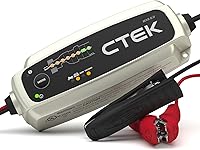
The CTEK Lithium US is built only for LiFePO4 batteries. Its 4.3A output suits packs from 5Ah to 60Ah, with maintenance charging up to 120Ah.
CTEK describes an 8-step program that tests the battery's condition, then charges and maintains it. It's spark-free and reverse-polarity protected, so a wrong hook-up won't fry the charger.
The output is 14.4V, which matches LiFePO4.
It's a narrow tool, though. It won't charge a lead-acid car battery, so it only makes sense as a second charger for someone who runs lithium.
Pick it if your RV, camper or solar setup uses LiFePO4. For a mix of lead-acid and lithium, the GENIUS5 covers both in one unit.
How do you match a charger to your battery?
Read the battery label first, then the charger's rating. The label gives you voltage and chemistry; the charger's rating tells you what it can safely feed.
When both match, you're clear to charge.
Follow this order:
- Find the battery's voltage (6V, 12V or something else).
- Identify the chemistry: flooded, AGM, gel or LiFePO4.
- Check the battery's capacity in amp-hours.
- Pick a charger whose voltage and profile match, with amperage in the right band.
- Connect in the charger's stated order, positive then negative, or negative then positive as instructed.
Amperage guidance is loose, but a charger around 10% of the battery's Ah rating is a safe starting point. A 5A unit sits well with a 40–120Ah battery.
A 750mA maintainer suits 3–30Ah packs. Bigger isn't better when the battery is small.
Our explainer on trickle chargers vs battery maintainers covers how the low-amp end works.
Can a low-amp maintainer charge a small battery?
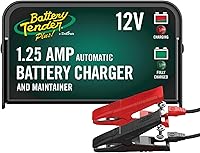
Yes, a maintainer is the right tool for small and stored batteries. A 750mA unit like the Battery Tender Junior charges a 3–30Ah powersport battery without cooking it.
It runs a 4-step program and switches to float once the battery is full.
It's rated for all 12V lead-acid types: flooded, AGM and gel. It's spark-proof and checks polarity before it starts.
Battery Tender says the float stage holds the battery at full charge during storage without overcharging. That makes it a sound choice for a motorcycle or mower you park for the winter.
It won't recover a battery left flat for months as reliably as a 5A charger with a force mode. And at 750mA, a big car battery would take days to charge.
Pick it for storage and small batteries, not as your only car charger. Our post on whether a trickle charger charges a battery digs into what these low-amp units actually do.
Is it safe to charge indoors or leave a charger connected?
Yes, when the charger is a smart maintainer and the space is ventilated. Lead-acid batteries give off hydrogen gas while charging, so don't seal them in a closet.
Lithium packs need room to vent too.
A garage or open shed is a better spot than a bedroom.
Smart chargers drop to a float or pulse stage when the battery is full. That's what lets you leave one connected for weeks, which is the whole point of winter storage.
Follow the charger's own instructions for long-term connection. Our guide on charging a car battery indoors covers ventilation and placement in detail.
Don't leave a basic trickle charger running for months. It keeps pushing a fixed current and can overcharge the battery.
A maintainer reads the voltage and only tops up when needed. That's the difference that makes long-term connection safe.
The bottom line on charger and battery matching
No, can battery chargers charge any battery? They can't, but one smart multi-chemistry charger covers most 6V and 12V lead-acid and LiFePO4 batteries, which is the realistic goal.
Match voltage, chemistry and amperage, and you're set.
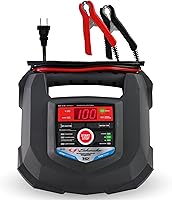
For most households, the GENIUS5 is the one-box answer: 6V and 12V, lead-acid and lithium, with a 5A output and a force mode for flat batteries. Pick the CTEK Lithium US if you run LiFePO4 only, or the Battery Tender Junior for motorcycle and small powersport batteries.
Check the label on every battery before you connect. If the chemistry or voltage doesn't match the charger, stop.
When you do charge a flat car battery at home, follow the safe order of steps in our car battery charging guide so nothing gets damaged.
Frequently asked questions
Can I use a car battery charger on a motorcycle battery?
Only if the charger's voltage and chemistry match the motorcycle battery. Many bike batteries are 12V lead-acid, so a 12V smart charger works, but a high-amp car unit can push too much current into a small cell.
Use a low-amp maintainer or a charger with a small-battery mode.
Can a lead-acid charger charge a lithium battery?
No. Lead-acid and lithium need different charge profiles, and a lead-acid charger can overcharge or damage a lithium pack.
Use a charger the maker rates for that lithium chemistry, such as LiFePO4, and check the voltage before connecting anything.
Can a 12V charger charge a 6V battery?
No. A charger built for 12V output pushes too much voltage into a 6V battery.
Some smart chargers offer both 6V and 12V settings, so check the output voltage before you connect and never assume one charger covers both.
Is it safe to leave a smart charger connected for weeks?
Yes, when the charger is a maintainer rated for long-term connection. It drops to a float or pulse stage once the battery is full and holds the voltage without overcharging.
Follow the charger's own instructions and keep the battery in a ventilated spot.
Can a dead battery be charged below 12V?
Some smart chargers can start from as low as 1V, and a force mode can wake a completely flat lead-acid battery. A battery left flat for months may not recover, though, so charge it as soon as you notice the problem.