Does a Trickle Charger Charge a Battery?
Yes, a trickle charger does charge a battery, but slowly and only up to a certain voltage. It feeds a small, steady current, so it takes many hours to top up a low battery and can't safely recharge a deeply drained one.
On this page (9 sections)
- How does a trickle charger actually charge a battery?
- Does a trickle charger charge a battery fully, or only partly?
- Can a trickle charger charge a completely dead battery?
- Will a trickle charger overcharge a battery if left on?
- How is a trickle charger different from a float charger?
- When should you use a trickle charger instead of a smart charger?
- What should you look for in a charger that does both?
- How do you use a trickle charger safely?
- So, does a trickle charger charge a battery?
Yes, a trickle charger does charge a battery, but slowly and only up to a certain voltage. It feeds a small, steady current, so it takes many hours to top up a low battery and can't safely recharge a deeply drained one.
That small output is the whole point. A trickle charger keeps a healthy battery topped up without the fast current that heats a cell and shortens its life.
The catch is that "trickle" means slow, and slow only works when the battery already has most of its charge.
How does a trickle charger actually charge a battery?
It sends a constant, low current into the battery over hours. The charger is not deciding anything; it just pushes current at a fixed, small rate.
The rate usually sits between 0.5 and 1.5 amps for a 12V car or motorcycle battery. That's tiny next to a jump start, but it's steady.
Over time the current drives the chemical reaction that stores charge in the lead plates. A Battery Tender Junior, for example, runs at 750mA.
Because the current never changes, a plain trickle unit can't tell when the battery is full. It will keep feeding current as long as it's plugged in.
That's fine for a short top-up and risky for days of storage. The difference between a trickle charger and a battery maintainer is the whole reason smart chargers exist.
Does a trickle charger charge a battery fully, or only partly?
It can reach full charge, but only on a healthy battery and only slowly. A battery at 70 or 80 percent will climb to full over a long session.
At 750mA, a 12V battery around 20Ah needs roughly a full day to go from low to full. A 1A charger takes about the same.
A 4.3A charger is much faster but costs more and is really a smart charger rather than a trickle unit.
The limit matters. A plain trickle charger tops up a battery that's already near full.
It's a poor choice for reviving a flat one. Most simple trickle chargers also lack a proper absorption stage, so the last few percent of charge comes slowly or not at all.
Can a trickle charger charge a completely dead battery?
Often no. A completely flat battery may not accept the small current a trickle charger offers, and a basic unit may not even recognize it's connected.
Lead-acid batteries that sit below a certain voltage become sulfated, and the plates harden. A trickle charger's gentle current is too weak to break that down.
A smart charger with a recovery or recondition stage is the better tool for a deeply discharged battery. The CTEK CT5, for instance, has a recond mode built for exactly this situation, though a battery that stays below 2V is usually beyond saving.
If the battery reads under 2V, or has been flat for months, replace it rather than trying to nurse it back. A trickle charger on a dead battery can waste days and leave you no further ahead.
Will a trickle charger overcharge a battery if left on?
Yes, a plain trickle charger can overcharge a lead-acid battery. Constant current with no cutoff keeps pushing energy in after the battery is full.
Overcharging drives water out of the electrolyte and heats the plates. Over weeks it can dry a flooded battery and damage an AGM or gel cell.
The damage is quiet and cumulative, which is why the charger you leave on all winter matters so much.
A smart charger avoids this by switching to a float or pulse stage at full charge. It then holds the battery at a safe voltage and only adds current when voltage dips.
That's the safe way to leave a charger connected for long periods. If you're wondering whether the opposite problem exists, our answer to can a trickle charger drain a battery covers it.
How is a trickle charger different from a float charger?
A trickle charger pushes constant current; a float charger holds a constant voltage. The float stage keeps the battery topped up without overcharging, so it's the safer choice for storage.
The two often get confused because both are "slow." A float charger reacts to the battery's voltage and backs off when the battery is full.
A trickle unit keeps the current on regardless. Our comparison of trickle charger vs float charger explains the difference in plain terms.
For a battery you charge and then remove, either type works for a top-up. For a battery you leave connected for weeks, only a float or smart stage is safe.
That's the line that matters most when you pick a charger.
When should you use a trickle charger instead of a smart charger?
Use a trickle charger for a short top-up on a healthy battery. Use a smart charger or maintainer for storage, deep discharge and anything long-term.
A trickle charger suits a battery that's already close to full and just needs a small bump before use. It's simple, cheap and does the job in a day.
A smart charger covers a wider range and won't cook the battery if you forget it.
The honest rule: if the charger might stay plugged in for more than a day or two, skip the trickle unit. A smart charger with float mode does everything a trickle charger does and adds protection.
That's why most long-storage advice points to a maintainer rather than a plain trickle charger.
What should you look for in a charger that does both?
Pick a smart charger with a float stage. It charges like a proper charger and then maintains like a maintainer, so one unit covers the whole job.
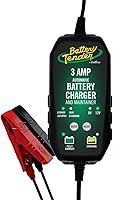
The Battery Tender Junior is the small, simple version. It's a 12V, 750mA charger and maintainer with a 4-step program: initialization, bulk charge, absorption and float.
Battery Tender says it switches to float mode at full charge and stays there without overcharging. It's ideal for 3–30Ah batteries in motorcycles, ATVs and scooters.
The included 12-foot output cord and fused-ring terminal harness mean you can wire it to a hard-to-reach battery and leave the plug end where you can reach it.
What does the CTEK 4.3 add for bigger batteries?
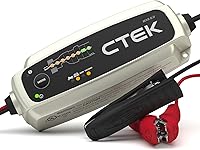
For a wider job, the CTEK 4.3 Test & Charge adds testing. It runs an 8-step program with float/pulse maintenance and handles batteries up to 160Ah.
CTEK says its test programs check battery and alternator condition, and the spark-free design with reverse polarity protection keeps connections safe.
When is the smaller CTEK CT5 the better fit?
The CTEK CT5 is the compact option for powersports. It's a 1.1A charger and maintainer for lead-acid and 12V LiFePO4 batteries, with a recond mode for deeply discharged batteries.
CTEK says normal mode suits all lead-acid types, including AGM. It ships with comfort connect clamps and a ¼ inch eyelet set, so you can swap between a quick clamp connection and a permanent lead on the bike.
How do you use a trickle charger safely?
Connect it to a battery in a ventilated spot and watch the time. Match the charger to the battery type and don't leave a plain trickle unit on for days.
Clamp red to positive and black to negative, or use the ring-terminal harness for a hard-to-reach battery. Plug in the charger last.
If you're new to this, our walkthrough on how to use a trickle charger covers the steps in order.
Keep the charger off wet floors and away from sparks. Lead-acid batteries give off gas while charging, so ventilate the space.
Check the battery after a day: if it's warm to the touch or hissing, stop the charge. A two-color status light on a smart unit tells you where the charge stands without guesswork.
So, does a trickle charger charge a battery?
Yes, but "charge" here means slow top-up, not a full recharge from flat. A trickle charger feeds a small constant current and can bring a healthy battery to full over many hours.
It can't safely revive a dead one and can overcharge if left connected.
Pick a trickle charger only when the battery is near full and you'll remove it within a day. Pick a smart charger or maintainer when you need a full charge, deep recovery or long storage.
That's the clear answer to whether a trickle charger charges a battery: it does, within limits, and a smart charger covers the rest.
Frequently asked questions
How long does a trickle charger take to charge a battery?
Expect many hours. At 750mA, a 12V battery of about 20Ah needs roughly a full day to go from low to full, and a 1A charger takes about the same.
A drained battery can take longer or never reach full.
Can a trickle charger overcharge a battery?
Yes. A plain trickle charger keeps feeding current after the battery is full, so long storage can overcharge a lead-acid battery.
A smart charger or maintainer switches to float mode instead, holding a safe voltage without damage.
Is a trickle charger the same as a battery maintainer?
No. A trickle charger feeds a steady low current.
A battery maintainer monitors voltage and only charges when needed, switching to float mode at full charge so it can stay connected for weeks without overcharging.
Should I leave a trickle charger connected all winter?
Use a maintainer for long storage, not a plain trickle charger. A smart maintainer switches to float mode at full charge and holds the battery without overcharging, so it can stay connected safely through months of storage.